
Last updated August 26, 2026
Free on-site gate assessment - hinges, posts, and your LiftMaster or Nice gate operator checked before anything is quoted
The assessment is free and the quote is the invoice.
Farm & ranch
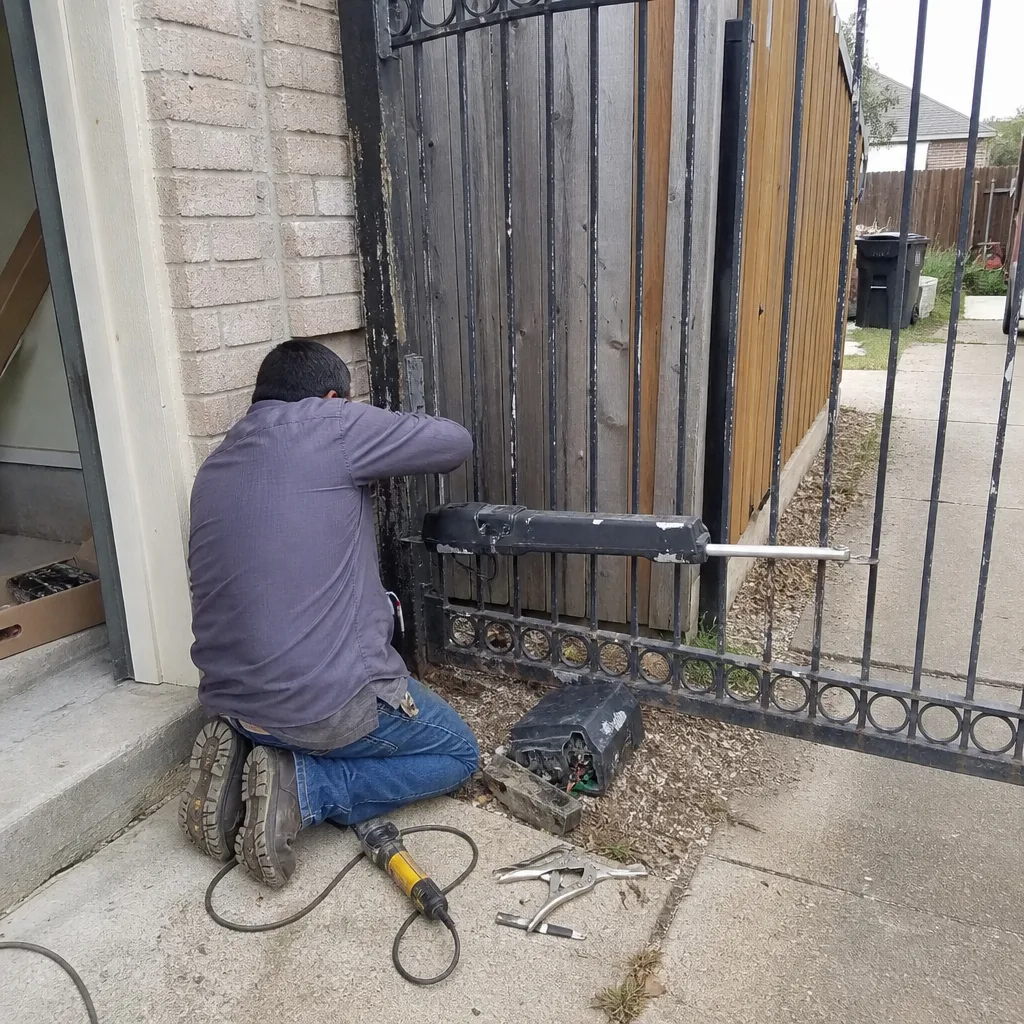 Before
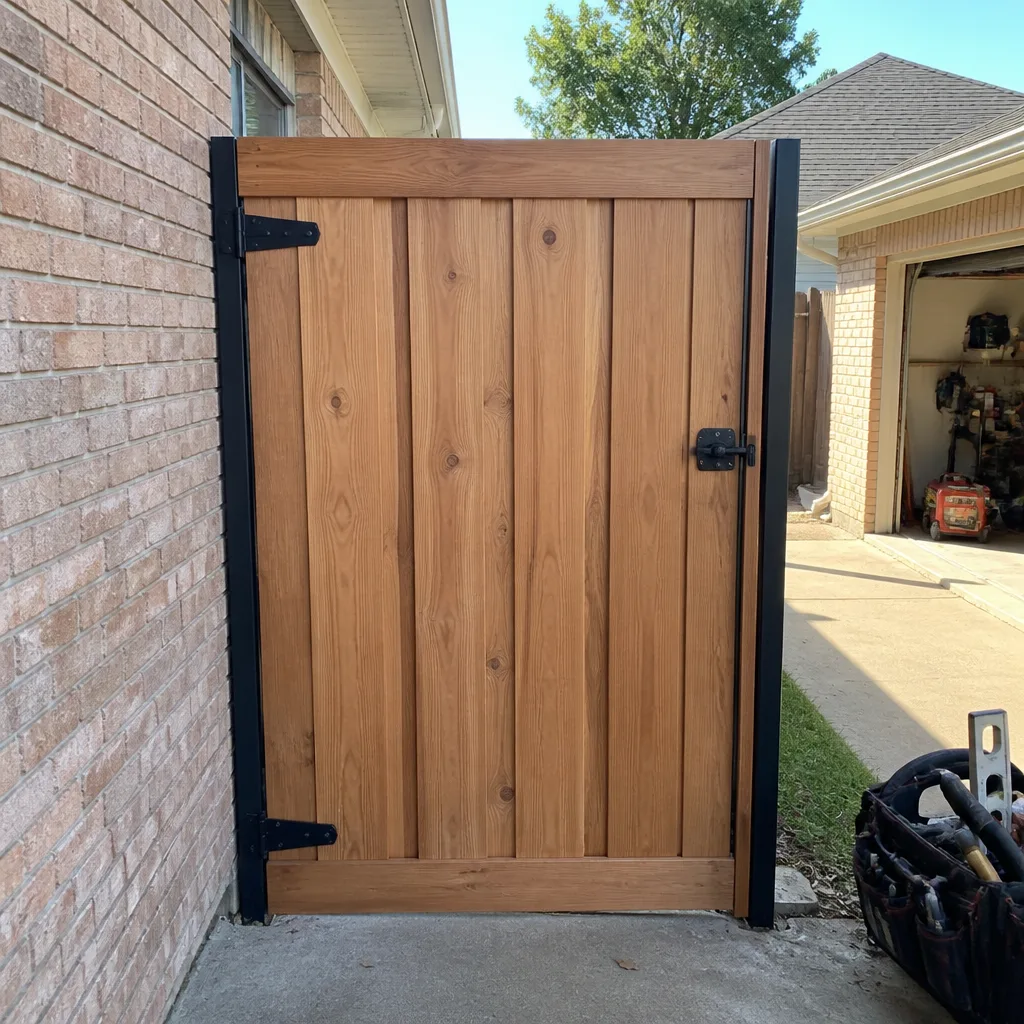 After
After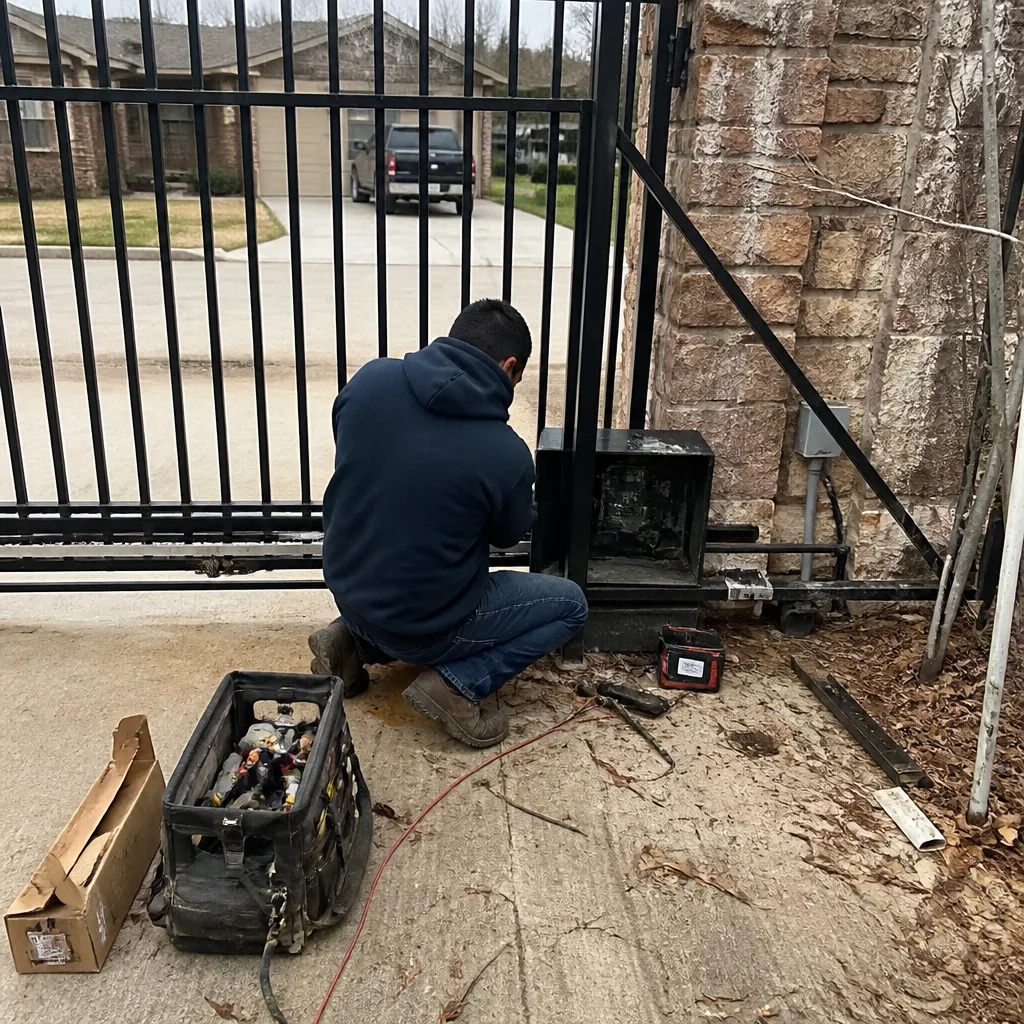 Before
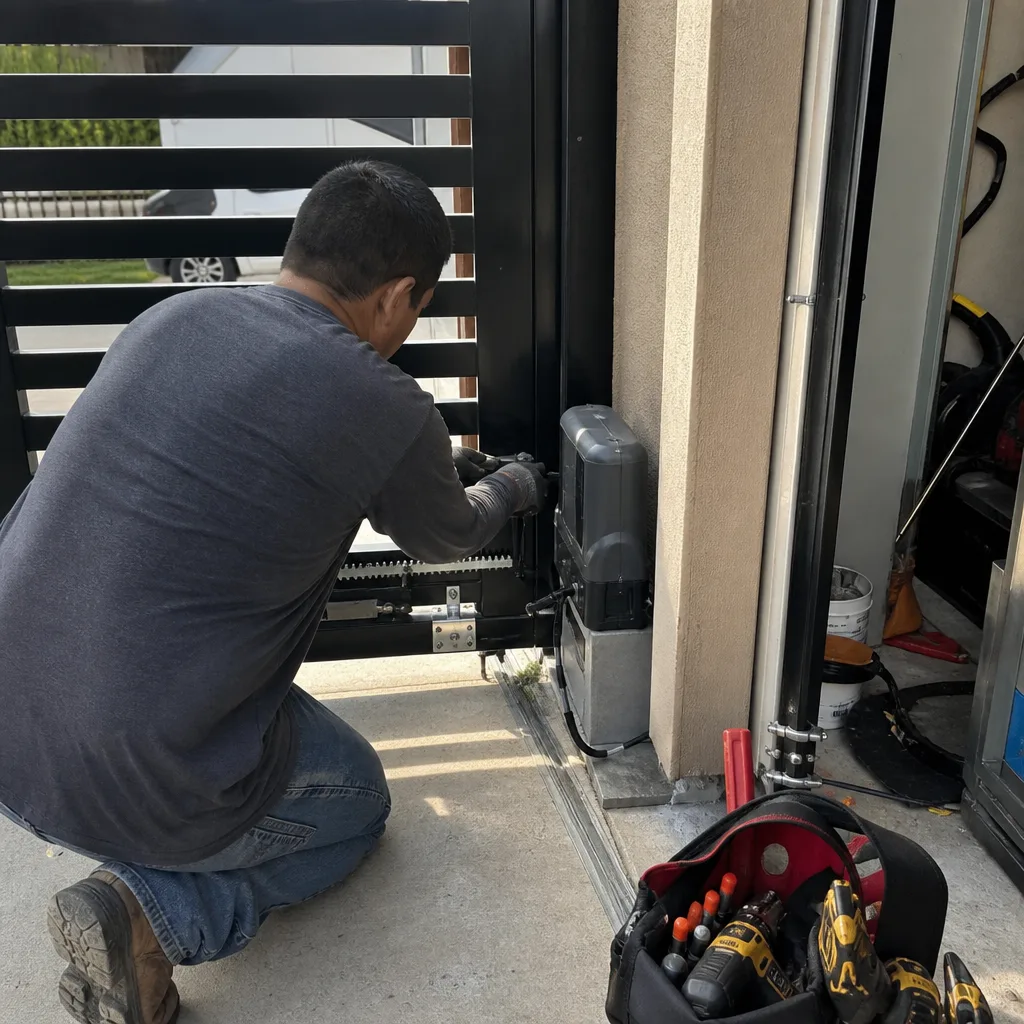 After
After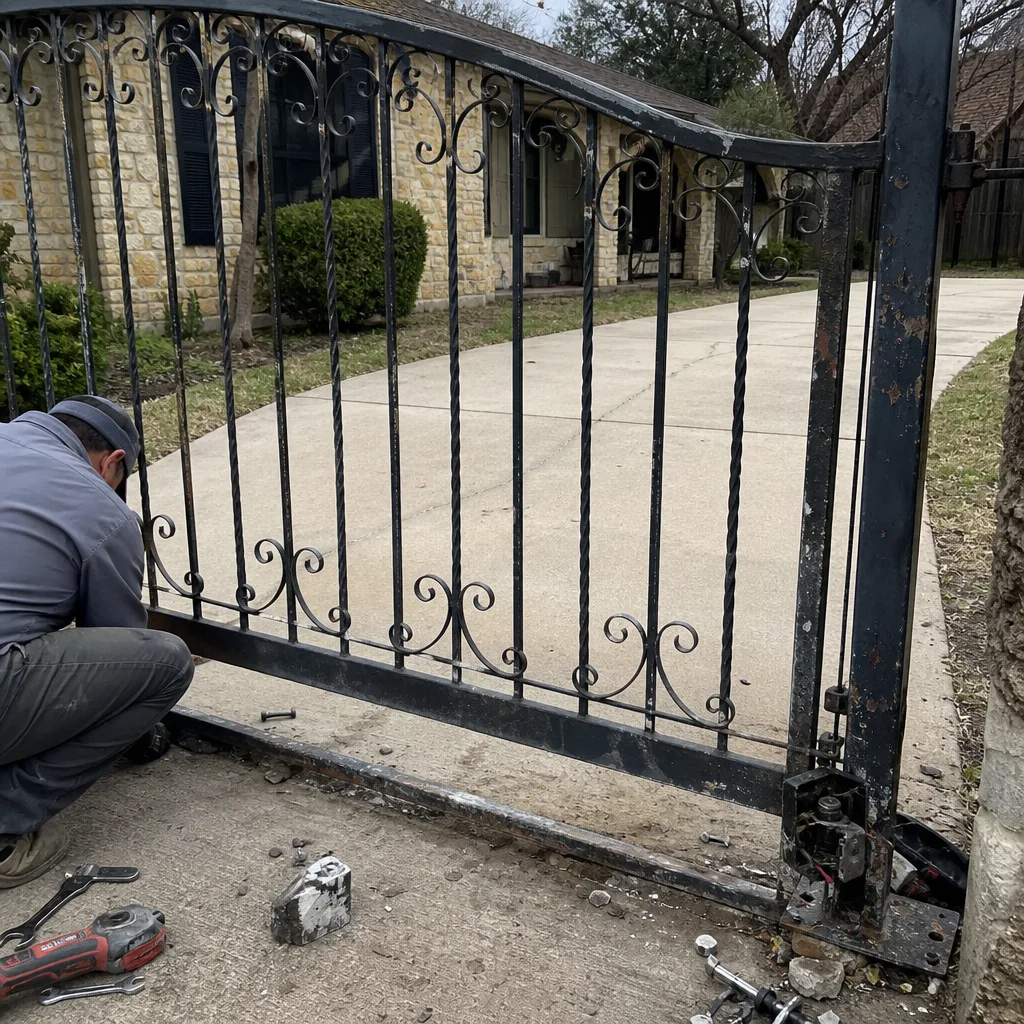 Before
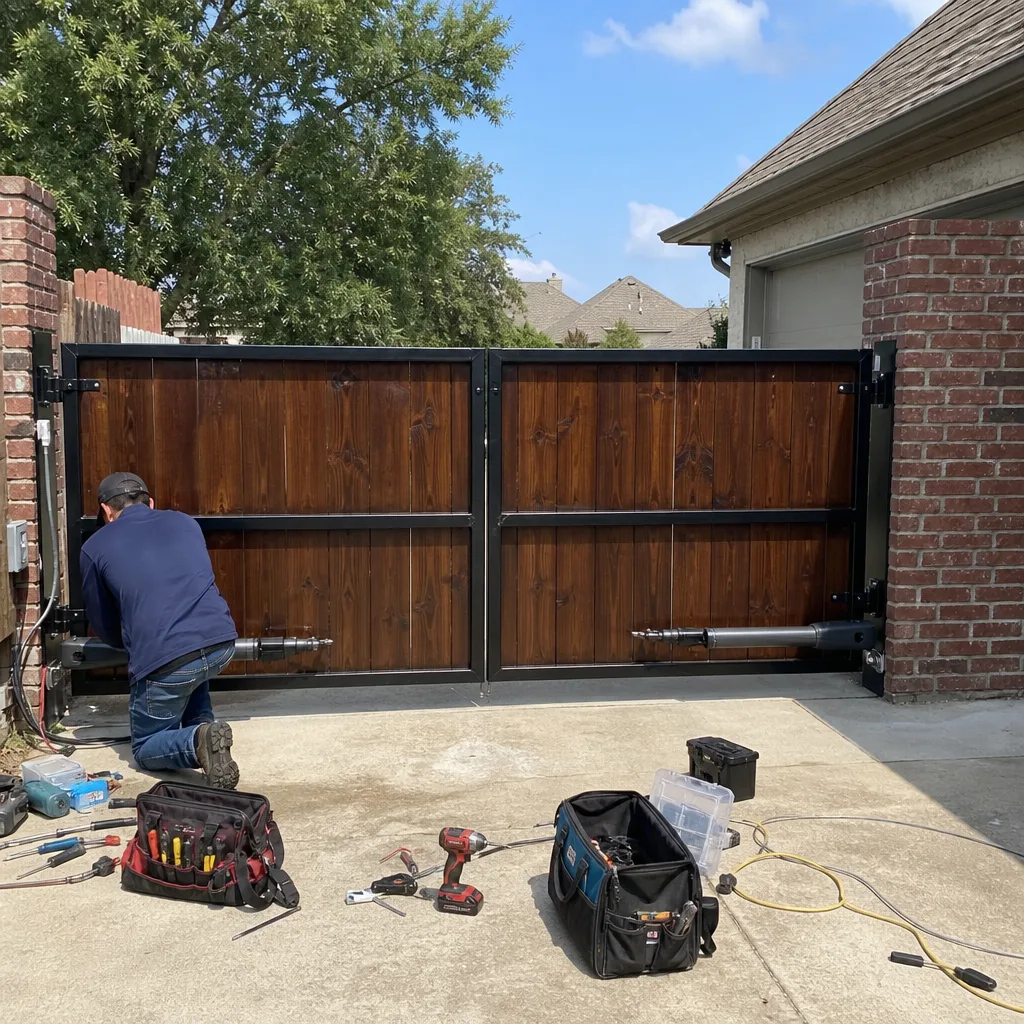 After
AfterSeasonal Gate Repair Care for Grand Prairie: Year-Round Homeowner’s Guide
July and August are when we get the most calls, and most of them are gates that were doing fine in March. The difference is usually 100-degree heat on a metal frame that was already fighting a loose hinge. By midsummer, something gives. This guide walks you through a year of gate care in Grand Prairie, month by month, so you catch the small stuff before it becomes a gate repair lying in your driveway at 7 a.m. on a workday.
Quick Answer
Seasonal gate care in Grand Prairie means working with the North Texas calendar, not a generic national schedule. The most important maintenance window is late May, before full summer heat arrives, followed by a pre-freeze check in early winter and a post-storm inspection every spring. Spend 15 minutes a month on the tasks below and most gate failures never happen, or check our more guides & resources for deeper dives.
Table of Contents
- Why Grand Prairie Is Different From the National Maintenance Calendar
- Why Late May Is the Single Most Important Maintenance Window
- Preparing an Automatic Opener for a North Texas Ice Event
- What the First Fall Rains Do to Clay Soil Around Gate Posts
- Spring Inspection After Hail or High Wind: Cosmetic vs. Structural
- The Month-by-Month Grand Prairie Gate Care Calendar
- Common Mistakes to Avoid
- When to Call a Professional
- Frequently Asked Questions
- The Bottom Line
Why Grand Prairie Is Different From the National Maintenance Calendar
Grand Prairie doesn’t have four equal seasons. It has a brutal summer that expands metal and dries wood, a brief fall that shifts soil after the first rains, a winter that occasionally freezes gate openers solid, and a spring that tells you everything your gate survived. Any maintenance guide written for a national audience misses this. A homeowner in Ohio is not fighting 105-degree heat on a black iron gate in late July. You are.
Here’s what that actually means for your gate, in practical terms:
- Metal expansion is real. A steel gate that fits perfectly at 70 degrees is measurably longer at 100 degrees. We’re talking fractions of an inch, but those fractions are why a gate that latched fine in April starts scraping the post in August.
- Wood moves the other direction. Cedar and pine dry out and shrink in North Texas summers, then swell when humidity returns in September. Gates with wood panels pick up gaps, then suddenly bind.
- Soil does its own thing. Grand Prairie sits on a mix of clay-heavy soils that shrink dramatically in drought and expand after rain. Your gate posts are set in that soil. When it moves, they move.
- Storms don’t respect a schedule. Spring hail, summer microbursts, and the occasional January ice event all stress the same welds, hinges, and opener gears.
We’ve been repairing gates in Grand Prairie since 2001, and the pattern is consistent. Homeowners who do a few seasonal checks get years of quiet service from a gate. Homeowners who ignore it until something breaks get a bigger repair bill and a gate that fails again six months later because the root cause was never addressed. The rest of this guide covers what to do and when to do it.
For a deeper look at how we approach individual repairs, see our Gate Repair in Grand Prairie page.
Why Late May Is the Single Most Important Maintenance Window
If you only do one gate maintenance task all year in Grand Prairie, do it in late May. Here’s the logic: by late May, the ground has mostly settled from spring rains, temperatures are warm but not yet brutal, and you have about two weeks before the first stretch of triple-digit days. Once that heat hits, metal expands, wood dries, and any marginal component gets pushed to failure. Catching a loose hinge on May 25 is a ten-minute fix. Catching it on July 25 means you’re also dealing with a bent gate frame.
Walk through this checklist in late May. It takes about 15 minutes total:
- Lift the gate from the latch end. Put a hand under the free end and lift. If the gate moves more than half an inch vertically, the hinge post or hinges themselves are worn. This is the single best early-warning test we know. A gate sags in the hinge post, not in the middle, and that is where we start.
- Watch the gate while it opens and closes. Stand back and look at the gap between the gate and the post on both sides. If the gap narrows toward the top or bottom, the frame is twisting. That’s usually a sign of a failed weld at the hinge or a bent top rail.
- Check every bolt and screw. Use a socket wrench on the hinge bolts and latch hardware. Because of the temperature swings in Grand Prairie, fasteners work loose every single summer. If you find any that are loose more than once, replace them or have the threads chased. Retightening a stretched bolt just means tightening it again in August.
- Lubricate hinges and latch points. Use a spray dry lubricant, not grease. Grease attracts dust, and Grand Prairie has plenty of it, turning your hinge pins into grinding paste by September. Spray dry lube displaces moisture and leaves a film that doesn’t collect grit.
- Look at the bottom rail clearance. With the gate in the closed position, check the gap under the bottom rail. If it’s dragging anywhere, the problem is either a hinge issue or a soil shift under the post. Fix the hinge issue now, before the extra drag starts bending your opener bracket.
Don’t skip the opener during the late-May window. Set the force adjustment, also called the current limiter, lower than the gate needs to operate normally. You want the motor to push just hard enough to move the gate, not hard enough to bend something the first time the gate binds in the heat. More on opener settings in the next section.
For homeowners considering a new gate rather than another season of repairs, our Gate Installation in Grand Prairie page covers what a proper install looks like from post to opener.
Preparing an Automatic Opener for a North Texas Ice Event
Grand Prairie ice events are rare but devastating to gate openers. The specific failure mode is this: freezing rain forms a skin of ice on the gate, the opener’s clutch or current sensor reads the added resistance as an obstruction, and the motor stalls, heating up its windings. Repeated stall cycles burn motors. The fix, before any ice arrives, is to adjust the opener’s force settings and review the release mechanism.
We service nine major gate-opener brands including Ghost Controls, DoorKing, Elite, and Mighty Mule. The settings below differ slightly by brand, but the principles hold across all of them.
- Lower the auto-close force. Find the force adjustment or obstruction sensitivity setting on your opener. Set it to the minimum that reliably opens and closes the gate. When ice adds weight and resistance, the opener will stop and retract rather than fight through it. That is exactly what you want. A stalled motor is a dead motor.
- Confirm the auto-reverse works. Put a gloved hand against the leading edge of the gate while it’s closing and apply moderate pressure. The gate should stop and reverse quickly. If it doesn’t, the safety function is compromised, and the first ice event will turn a frozen gate into a broken gearbox.
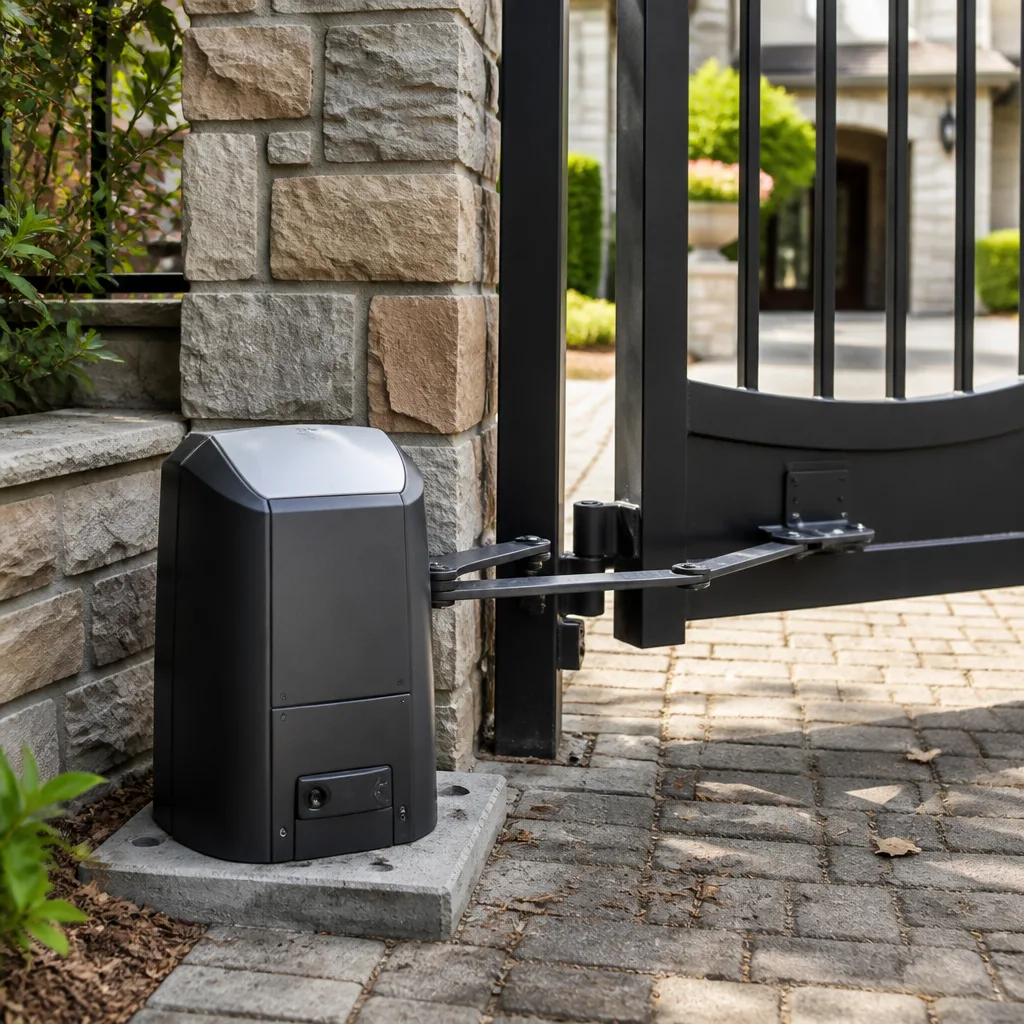
- Locate the manual release before you need it. Every automatic opener has a mechanical release that disconnects the motor from the gate. On DoorKing units, it’s usually a small lever or key release on the side of the operator. On Mighty Mule and Ghost Controls units, there’s typically a pull pin or keyed release. Know where yours is and test it once a year. When a gate is frozen solid, you want to be able to disconnect the opener so you can chip away ice without fighting the motor.
- Check the battery backup if you have one. Many Grand Prairie homes have solar-powered openers or battery backups. Cold weather reduces battery capacity significantly. If your backup is more than three years old, test it in early winter by killing power to the opener and running the gate three or four full cycles. If it fades before the third cycle, replace the battery before a storm, not during one.
- Clear drainage at the opener base. Water pooling around the operator’s foundation can freeze and lock the drive mechanism internally. Sweep leaves and debris away from the base of the operator and make sure the weep holes on the housing are clear.
One more thing worth saying plainly: if your gate is frozen shut and the opener is straining, disconnect the motor and wait for the thaw. Chipping three inches of ice off a gate while the opener is still connected is how gearboxes and wrists get broken. Motor and opener work is the most expensive repair on most gates, and a little patience saves you hundreds of dollars.
For a deeper discussion of opener service and brand specifics, visit our Gate Motor & Opener in Grand Prairie page.
What the First Fall Rains Do to Clay Soil Around Gate Posts
Grand Prairie sits on some of the most expansive clay soils in Texas. During a dry August, that clay shrinks and cracks. When the first meaningful fall rains arrive in September or October, the clay absorbs water and swells, sometimes lifting posts a quarter inch or more. Then it dries again and drops them back down. Over a few seasons, this cycle walks posts out of alignment.
The simple check that tells you whether your posts moved:
- Run a string line between the two gate posts. Tie a string tight across the top of both posts, from the same reference point on each. Use a level to confirm the string is level, or just eyeball it if the gate area isn’t perfectly flat.
- Measure the gap between the string and the top of the gate in three places: at the hinge end, at the middle, and at the latch end.
- Compare your numbers. If the middle measurement differs from the ends by more than three-eighths of an inch, something has moved. If the latch end gap is significantly larger than the hinge end gap, the latch post has settled or the hinge post has risen.
- Check the reveal between the gate and both posts. Open the gate halfway and look at the vertical gap on each side. It should be consistent top to bottom. A gap that’s wider at the top on one side and wider at the bottom on the other means the posts are no longer plumb relative to each other.
If you catch this early, the fix is often as simple as re-shimming the gate at the hinges, grinding a bit of metal, or resetting one post with fresh concrete. If you ignore it for a full season, the gate’s weight starts working against a tilted post, and eventually the post leans enough that the gate drags, the opener binds, and the hinges oval out. Then you’re looking at full post replacement.
We run into this constantly in neighborhoods like Dalworth, Forum, and Mira Lagos, where the original post footings weren’t deep enough for the soil conditions. The standard rule around here is a post should be set at least 30 to 36 inches deep in undisturbed soil with a proper concrete footing. Anything less is a repair waiting on the calendar.
Spring Inspection After Hail or High Wind: Cosmetic vs. Structural
North Texas spring storms pound gates. Hail dents panels, wind slams gates against their stops, and flying debris does to welds what years of normal use never could. After a bad storm, you’re looking at damage that’s either cosmetic or structural, and telling the difference matters. Cosmetic damage can wait. Structural damage gets worse every time the gate cycles.
Cosmetic damage, safe to monitor:
- Small dents in flat panels that don’t affect the gate’s movement or alignment
- Scratched paint or powder coat with no bare metal exposed to the elements of a Grand Prairie summer
- Faded or cracked plastic trim pieces that are purely aesthetic
- Minor surface rust forming where hail knocked chips in the finish
Structural damage, needs attention quickly:
- A gate that now drags or scrapes when it didn’t before the storm, indicating the frame bent or a post shifted
- Any crack in a weld at the hinge points, latch, or where the top rail meets the stile
- A visible bow in the top or bottom rail when you sight down the length of the gate
- The opener bracket pulling away from the gate or the post, even by an eighth of an inch, because that bracket is now levering against the motor
- Latch bolt no longer lining up with the catch by more than a quarter inch
Here’s the test we tell every Grand Prairie homeowner: after a storm, run the gate three full cycles, open to close. The first cycle tells you if it still works. The second cycle tells you if it works the same twice. The third cycle tells you whether anything is bending incrementally. If the sound changes, even slightly, or a gap opens up that wasn’t there before, something’s moving that shouldn’t be.
We do a lot of insurance-related repair work after spring hail events. Gates are covered under most homeowner policies, and the claim process moves faster when you can document the damage early with dated photos. We’re glad to look at whatever your adjuster flagged and give you a straight answer on whether it’s structural or cosmetic.
The Month-by-Month Grand Prairie Gate Care Calendar
Most maintenance calendars are overwhelming enough that nobody does them. This one is sized for real life. Every task takes 15 minutes or less. Set a phone reminder for the first Saturday of each month and knock out that month’s single item. A year of that and your gate gets more attention than most gates in Grand Prairie ever see.
January
Clear ice and debris from the gate track and the opener base. If an ice event is forecast, disconnect the opener and operate the gate manually. Look for water pooling anywhere near the opener and make a note to address drainage in spring.
February
Test the auto-reverse function with light hand pressure on the leading edge. Check all hinge bolts for tightness. Cold snaps cause faster contraction in metal, and this is when bolts work loose.
March
Walk the gate and posts after the first heavy spring rain. Look for new cracking in the soil around post bases, shifting gate alignment, or water standing anywhere it didn’t before. This is your soil-movement baseline for the year.
April
Lubricate all hinge pins and the latch mechanism with dry spray lubricant. Check the opener’s drive chain or belt tension if your unit uses one. If it’s an Elite or DoorKing slide gate, check the drive wheels for debris.
May
Do the full late-May checklist from earlier in this guide: lift test, gap inspection, bolt tightening, opener force adjustment. This is your single most important month. Don’t skip it.
June
Check the gap under the bottom rail after the first stretch of 95-degree days. Heat expansion reveals hinge wear faster than any other condition. If the gate drags now, it’ll drag worse in August. Tighten what’s loose and note what’s worn.
July
With afternoon heat peaking, check the opener’s thermal cut-off behavior. If the opener stops and starts again minutes later, it’s overheating, not failing. Give it a rest during peak heat by setting it to manual mid-afternoon. If it overheats regularly, the motor is likely undersized or aging.
August
Inspect welds visually on the hinge side and latch side. Heat stress cracks show up here first. Look for hairline fractures in the paint or powder coat at weld points. If you see one, it’s cheaper to have it welded now than to have the gate fail in September.
September
Check posts with the string-line method described earlier. The first fall rains swell clay soil and shift shallow posts. This is also a good month to tighten the gate to the opener bracket.
October
Clean the opener housing and weep holes. Remove leaves and spider webs that block airflow, which matters when fall humidity rises. Lubricate the opener’s drive mechanism per the manufacturer’s spec.
November
Test your battery backup if you have one. Inspect the manual release mechanism and make sure it turns freely. Review the ice-preparation steps from earlier in this guide. Winter is coming, and an ounce of November work beats a pound of January repair.
December
Verify the gate closes and latches completely every time, since this is the season when partial closure leaves the gate banging in north winds. Tighten latch hardware and adjust the strike if needed. Check that the auto-close timer isn’t set so short it closes on a car still pulling through.
Common Mistakes to Avoid
- Greasing hinges instead of using dry lube. Grease collects the fine clay dust that blows through Grand Prairie all summer, and that dust becomes an abrasive paste. Use dry spray lubricant and wipe off excess.
- Adjusting the gate instead of fixing the hinge. When a gate drags, the instinct is to shim the hinge or cut the bottom rail. In our experience, nine times out of ten the real problem is a worn hinge pin or a post that’s moved. Fix the panel without the post and you’ll fix it twice.
- Running the opener with the force setting too high. This is how you turn a minor gate bind into a bent frame. The opener’s job is to move the gate, not to muscle it into submission. Keep the force as low as reliable operation allows.
- Ignoring a gate that closes on its own. Show me the gate closing on its own and I’ll show you where it’s failing. That’s a hinge post out of plumb, and every cycle is making the problem more expensive.
- Pouring concrete around a post that’s still moving. If a post is loose and you stabilize the soil without addressing what caused the movement, a season later the post is loose again, now set in concrete you have to remove. Find the root cause first.
- Leaving the opener connected during an ice event. Frozen gates stall motors. Stalled motors burn windings. Disconnect the opener and operate manually until the ice clears.
- Waiting until the gate fails to call anyone. We get calls in July from homeowners whose gates worked fine in March. By the time it fails, three months of wear have piled onto whatever was already wrong. Late May is the month to catch it.
When to Call a Professional
Some gate work is weekend-warrior territory. Tightening bolts, cleaning tracks, changing batteries, replacing a gate opener remote, all of that you can absolutely do yourself. Other work needs a welder and a level of caution that isn’t worth learning the hard way. If a gate post is cracked or leaning, if a weld is failing at a hinge point, if an opener is tripping repeatedly despite a clean track and a balanced gate, or if you’re adjusting the gate to compensate for a symptom instead of fixing the cause, that’s the time to call. Gate springs and heavy frames under tension can hurt you quickly, and an opener wired into line voltage is not a hobby project. Gatewood Fence & Gate offers free estimates in Grand Prairie. Call (903) 829-4499 and we’ll look at it together.
Read more about how we work on our Gatewood Fence & Gate home page.
Frequently Asked Questions
Most gate repairs in Grand Prairie run between $150 and $500 depending on whether you’re dealing with a hinge replacement, a welded frame repair, or an opener component. A simple hinge-pin replacement is usually under $200. A full weld repair or post reset can range from $400 to $1,200. We quote every price before work starts and it doesn’t change at the door. Call (903) 829-4499 for a free estimate in Grand Prairie.
Do your major maintenance in late May, before full summer heat arrives, and again in early winter, before the first freeze threat. Light monthly checks throughout the year catch bolts, bearings, and batteries before they fail. The single most valuable 15 minutes you’ll spend on your gate all year is the late-May checklist in this guide.
Yes, and it usually happens through motor burnout, not mechanical breakage. Ice adds resistance, the opener’s current sensor reads it as an obstruction, and the motor stalls. Repeated stall cycles overheat the windings. The prevention is to keep the force setting low and disconnect the opener manually during an ice event.
We service LiftMaster, FAAC, BFT, Linear, Viking, Ghost Controls, DoorKing, Elite, and Mighty Mule. That covers the vast majority of residential and light-commercial openers installed across Dallas and Tarrant Counties. If you’re not sure what brand you have, we’ll identify it at the site visit.
Lubricate hinges every three months with dry spray lubricant. Grand Prairie’s dry, dusty conditions mean grease-based lubricants collect grit and become abrasive. If you hear squeaking between lubrication intervals, check the hinge pins for wear, because squeak usually means metal-on-metal contact that lubrication alone won’t fix.
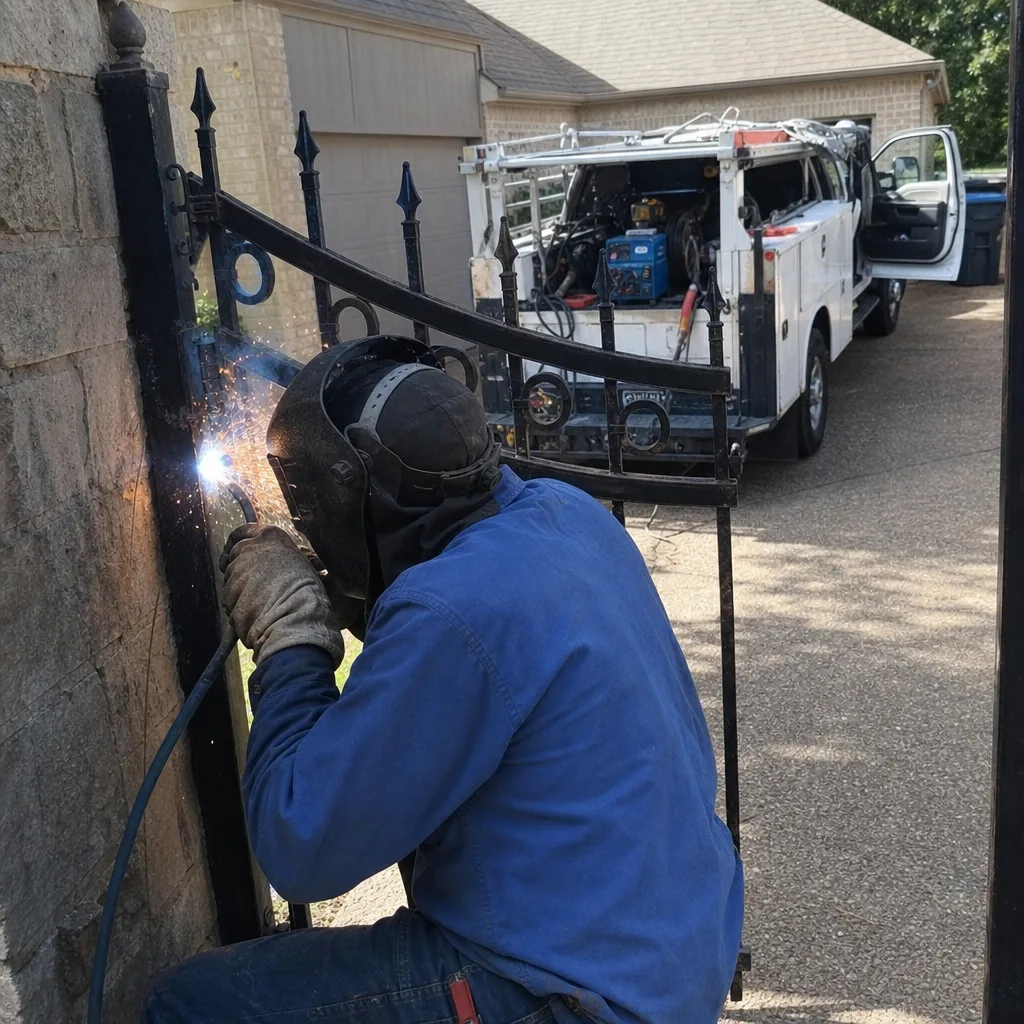
Yes. We do on-site welding, which means your gate stays in your driveway instead of going to a shop. On-site welding is the most reliable way to fix a frame crack at the hinge point without re-hanging the gate. It’s faster, it’s more accurate, and you’re not living without a gate for a week.
The Bottom Line
Grand Prairie gates fail on a predictable schedule: heat stress in July, clay-soil shifting in September, ice events in January, and storm damage in April. You don’t need to fight all four seasons. You need to spend 15 minutes a month on the right checks, with the biggest single investment in late May before summer tests every hinge and weld. Catch a loose hinge in May and it’s a ten-minute fix. Catch it in August and you’re ordering a new gate frame. We’ve been fixing gates in Grand Prairie since 2001, welding on site, and standing behind every job with the 90-Day Done Right Promise, as detailed in The Complete Guide to Gate Repair in Grand Prairie. If you’d rather have a second set of eyes on your gate before the season turns, call (903) 829-4499. It’s a free estimate, and a live person answers.
Written by Hal Gatewood, Owner at Gatewood Fence & Gate, serving Grand Prairie since 2001.