
Last updated August 26, 2026
Free on-site gate assessment - hinges, posts, and your LiftMaster or Nice gate operator checked before anything is quoted
The assessment is free and the quote is the invoice.
Farm & ranch
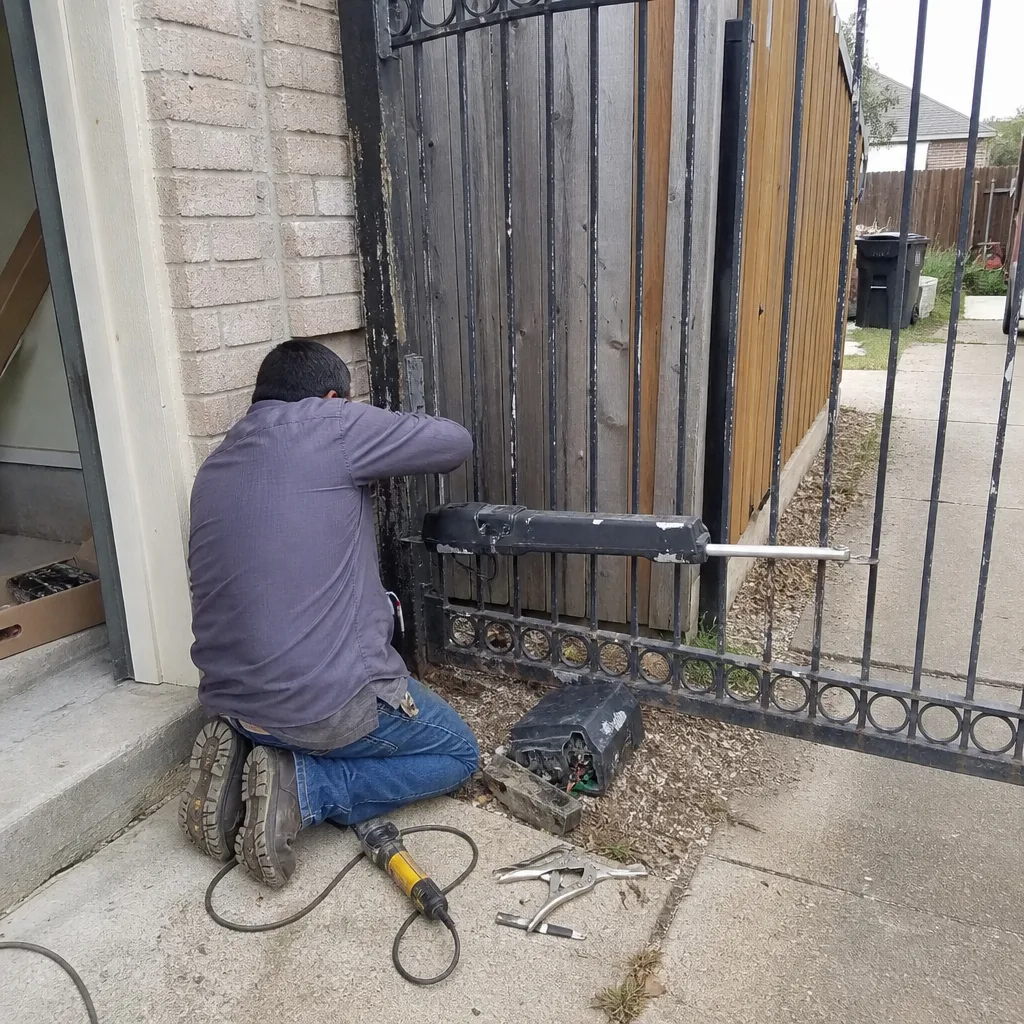 Before
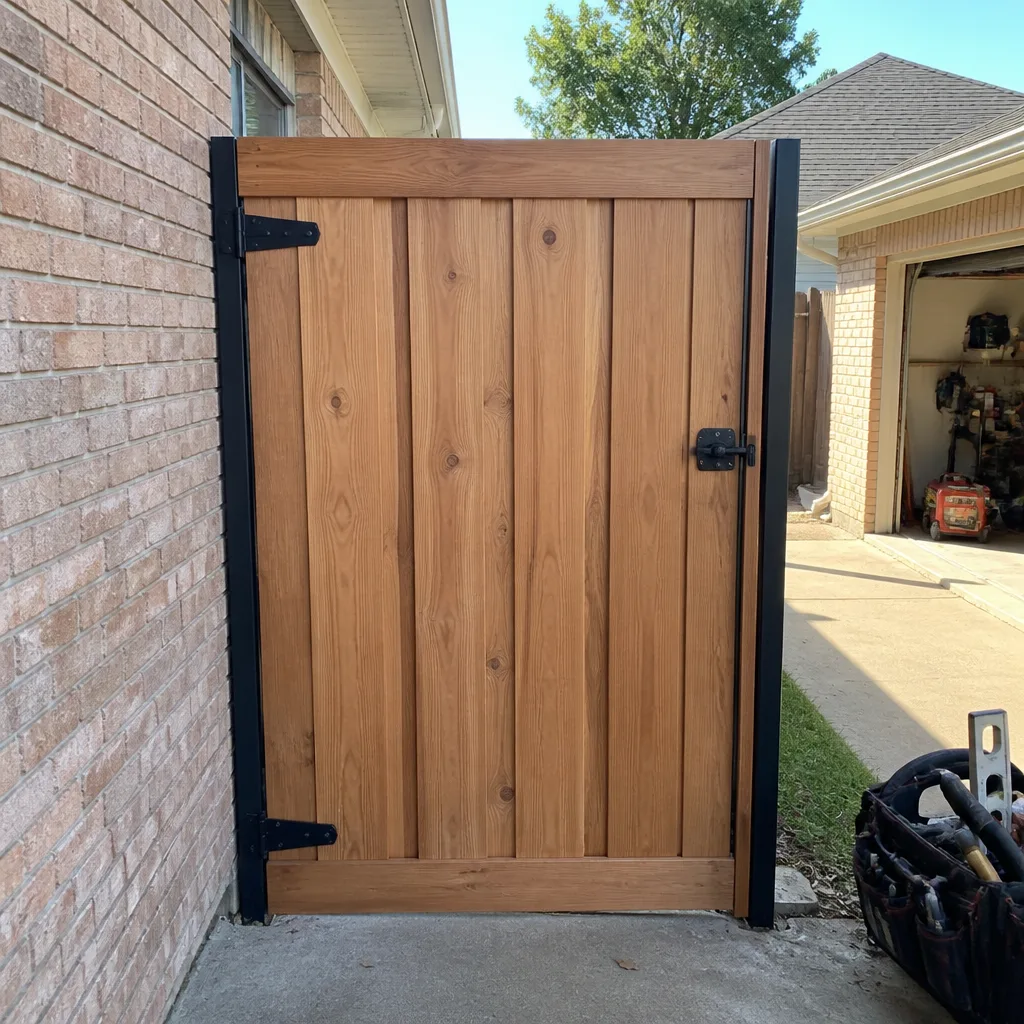 After
After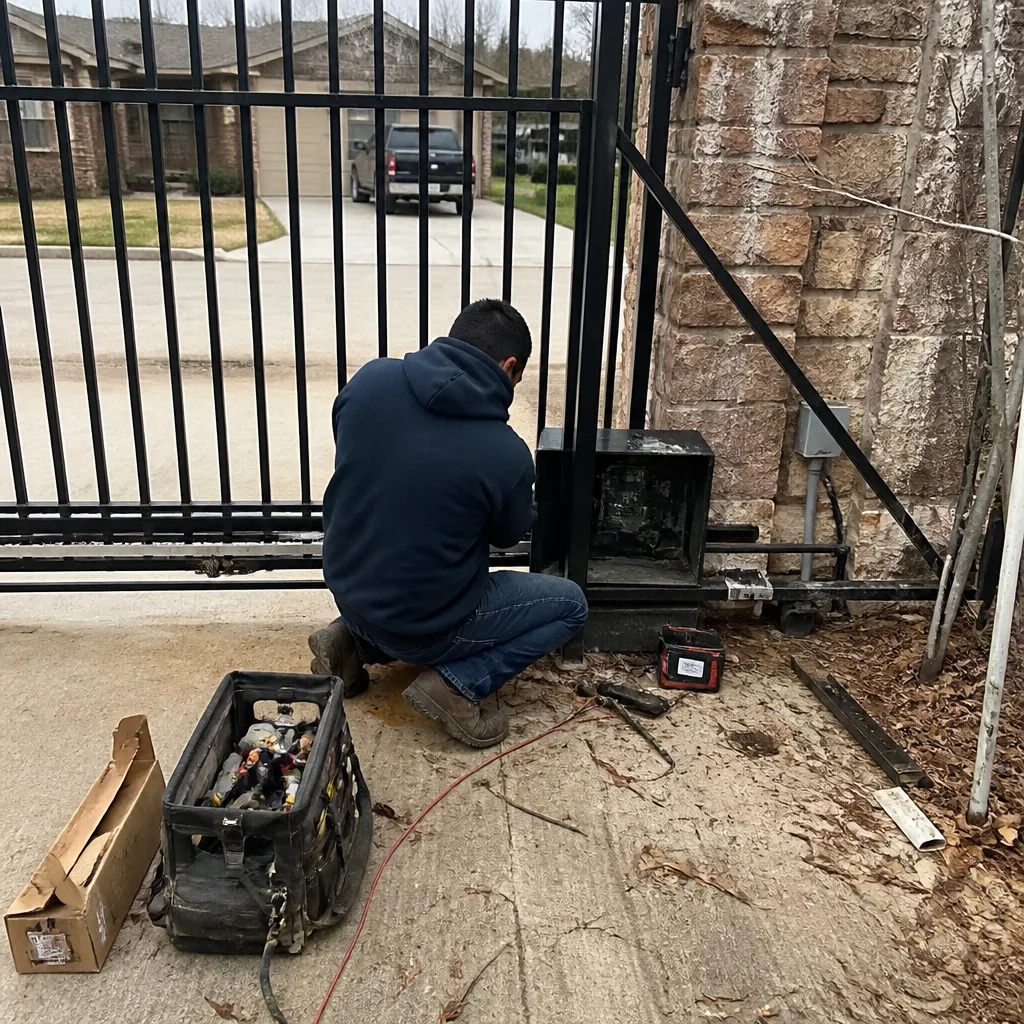 Before
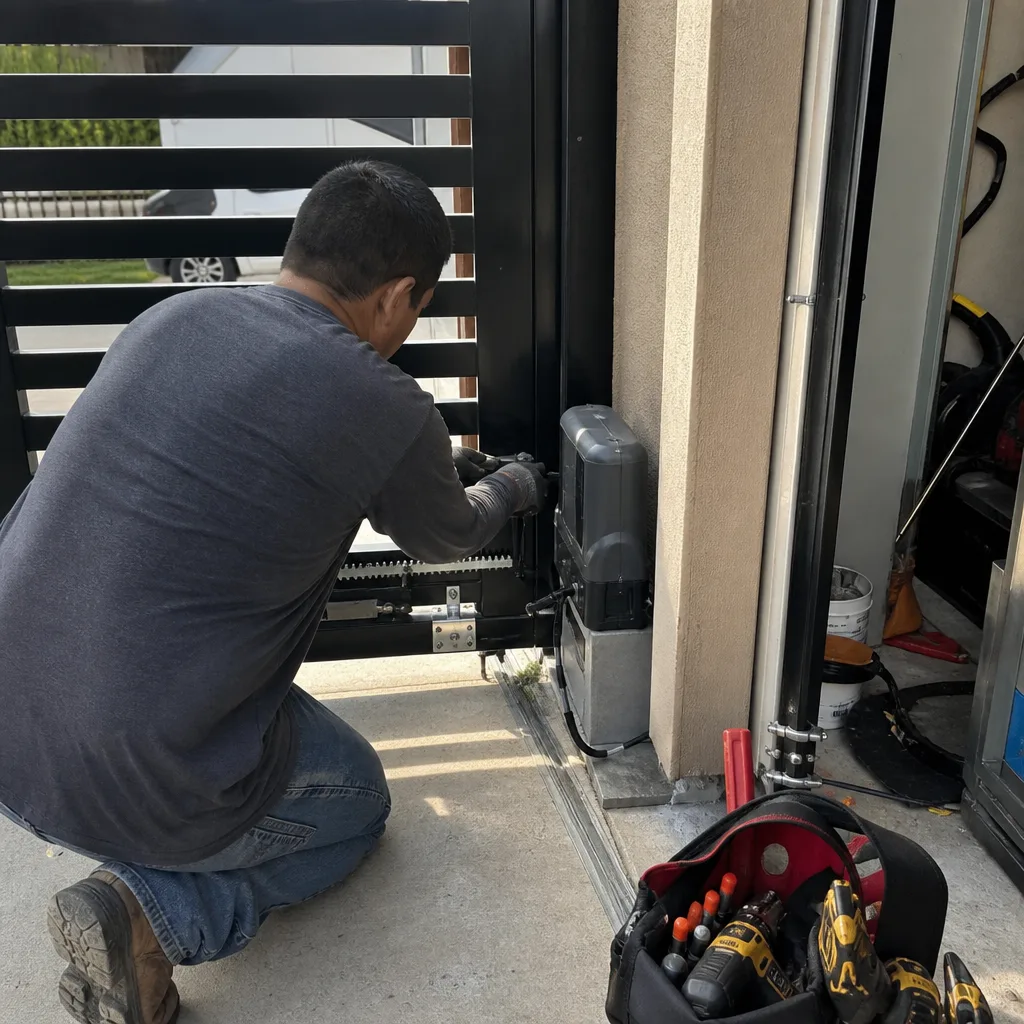 After
After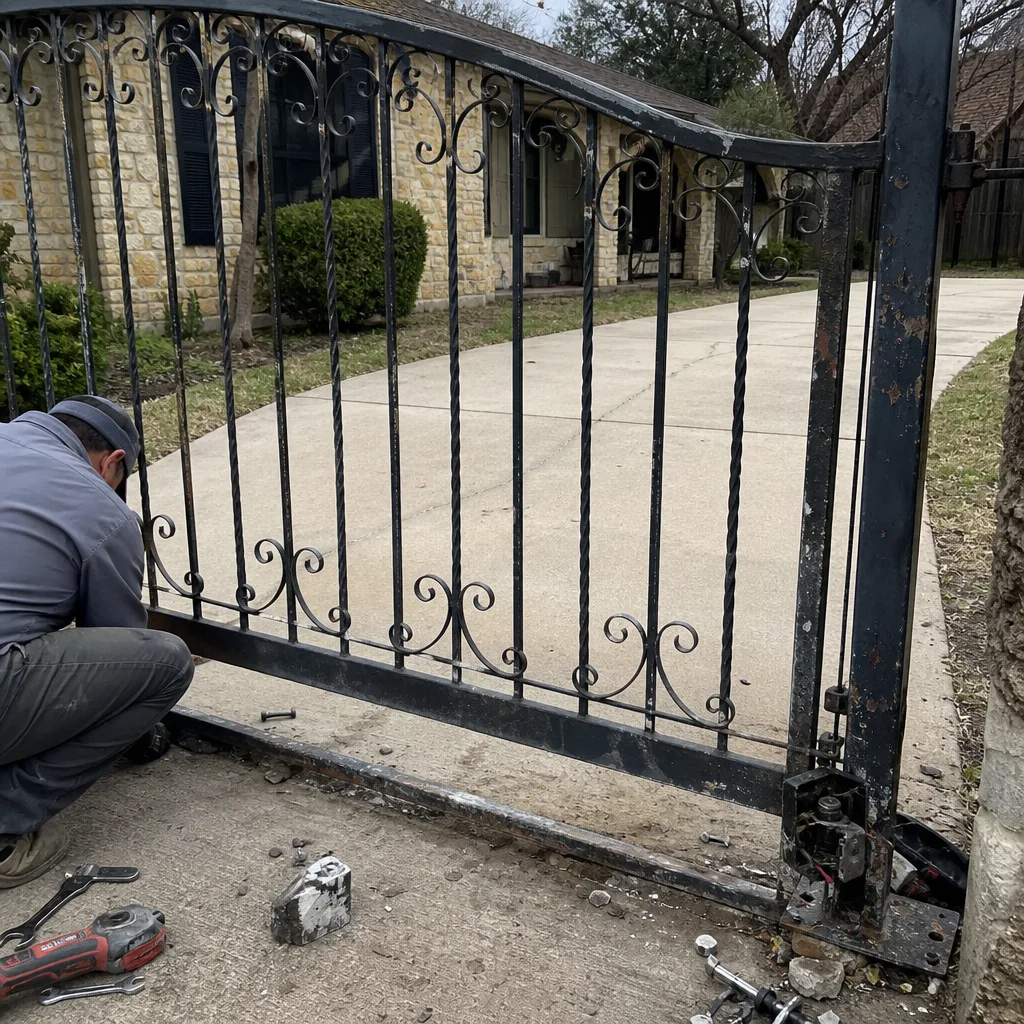 Before
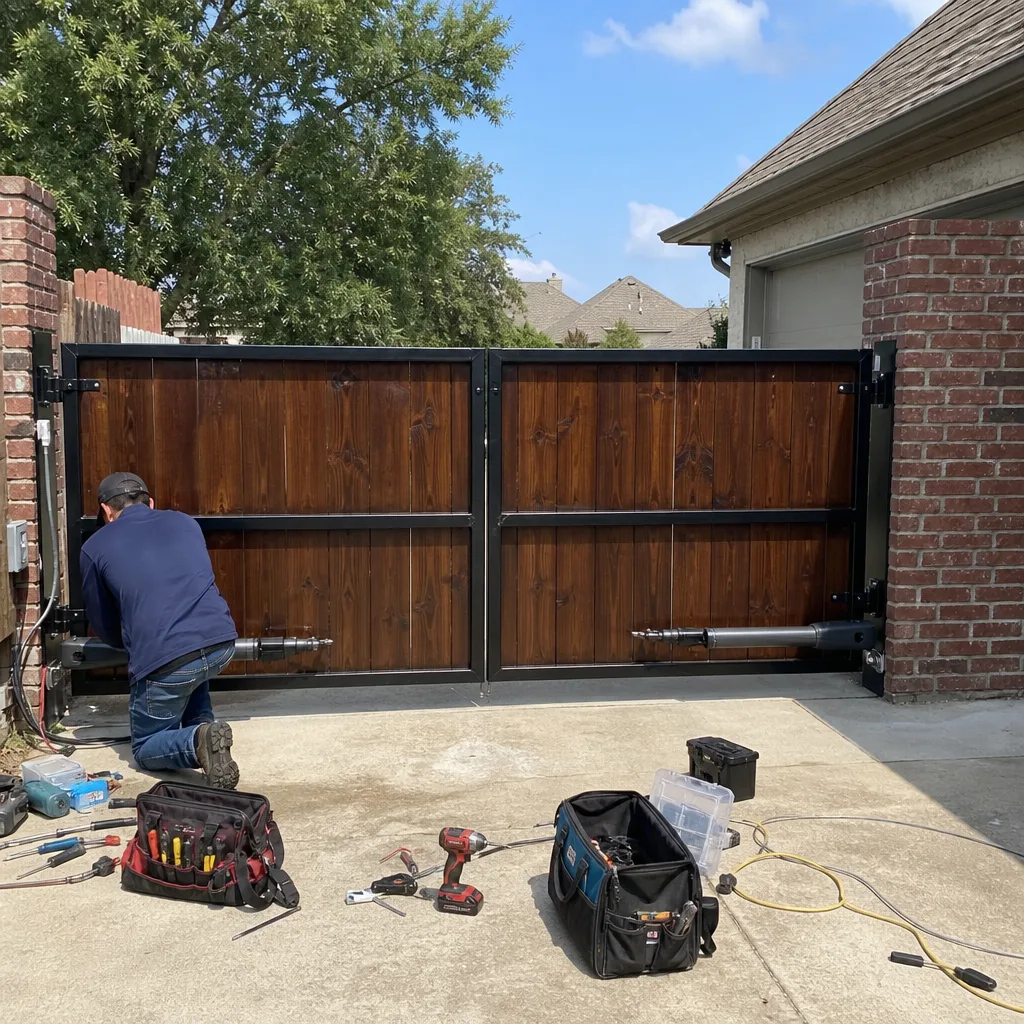 After
AfterGate Repair Cost Breakdown: The Grand Prairie Homeowner’s Reference for 2026
Here is something that took me twenty-plus years to put into words: the price you get for gate repair is not a quote for parts and labor. It is a statement about how that contractor runs his business, how much risk he is willing to carry, and what he thinks your job is worth to him. In Grand Prairie, I have watched the same broken hinge on the same style of ornamental iron gate get quoted at $180 by one outfit and $950 by another. The materials were identical. The difference was everything else. This Gate Repair guide lays out real 2026 numbers for real repairs in the Grand Prairie market, what drives each line item on a written estimate, and how to read the quote in your hand without a contractor’s thumb on the scale. By the end, you will know more about gate repair pricing than most people who give the quotes.
Quick Answer
Gate repair in Grand Prairie, TX generally costs between $180 and $2,800 in 2026, depending on the repair. Minor fixes like a latch replacement or a single hinge run $180 to $450, a post reset runs $350 to $900, structural weld repair runs $250 to $1,200, and a full opener motor replacement runs $600 to $2,800. Most residential hinge and latch repairs fall between $200 and $500 and can be completed in a single visit.
Table of Contents
- What Actually Drives Gate Repair Pricing in Grand Prairie
- The Most Common Gate Repairs and Their 2026 Price Ranges
- On-Site Welding vs. Fab-Shop Work: Why the Distinction Matters
- Service Call Fees: What They Should and Shouldn’t Include
- The Honest Math on Repair vs. Replace
- The 90-Day Warranty Math: Why the Cheaper Quote Can Cost More
- How to Read a Gate Repair Quote Line by Line
- What to Know About Ghost Controls, DoorKing, Elite, and Mighty Mule
What Actually Drives Gate Repair Pricing in Grand Prairie
Three things set the price, and only one of them is the part. Labor, markup, and warranty. Labor is the big one. A hinge replacement on an ornamental iron gate sounds simple until you show up and find the post is set in a concrete footer poured in 1998, the gate weighs 400 pounds, and the hinge barrel has rusted through in a way that means the pin won’t come out without heat. That is a two-man job, a half day. The hinge itself costs $25 to $60. The labor is what you are paying for.
Markup is the second driver, and this is where Grand Prairie quotes diverge wildly. Some contractors run a flat 100% markup on every part they touch. Some buy the cheapest hinge they can find at a box store and mark it up 300%. Some charge you their actual cost because they make their money on labor. You cannot see any of this from the outside, which is why the lowest quote is not always the cheapest job and the highest quote is not always a rip-off. A contractor who marks up parts 100% but charges honest labor can undercut a contractor who marks up 300% and pads his hours, even though the second guy looks cheaper on paper.
Warranty is the third driver, and it is the one most homeowners never think about until the repair fails. A contractor who plans to answer your call in three weeks has built that risk into his price. He can charge less because he doesn’t intend to come back. A contractor who will stand behind the work for 90 days and actually show up if it isn’t right has to charge enough to cover the occasional call-back. The difference is usually $40 to $120 on a typical repair. That is not padding. That is the cost of accountability.
Grand Prairie’s climate feeds into this too. The clay soil under much of the metroplex shifts with the wet and dry cycles, which means posts set 20 years ago move. Heat expands the metal. Spring storms shove gates that were barely holding on. A repair that might be a simple $250 swap in a mild climate turns into a $600 post reset and rehang here because the post has been walking for a decade and nobody caught it.
Quick Reference: 2026 Grand Prairie Gate Repair Price Table
- Hinge replacement (single, ornamental iron): $180-$450, includes rehang and adjustment
- Hinge post reset (dig, level, re-set in concrete): $350-$900
- Weld repair (cracked rail, broken picket, structural failure): $250-$1,200
- Latch replacement (gravity latch, keyed latch, panic hardware): $150-$400
- Gate opener motor replacement (residential swing or slide): $600-$2,800
- Opener circuit board or receiver repair: $200-$700
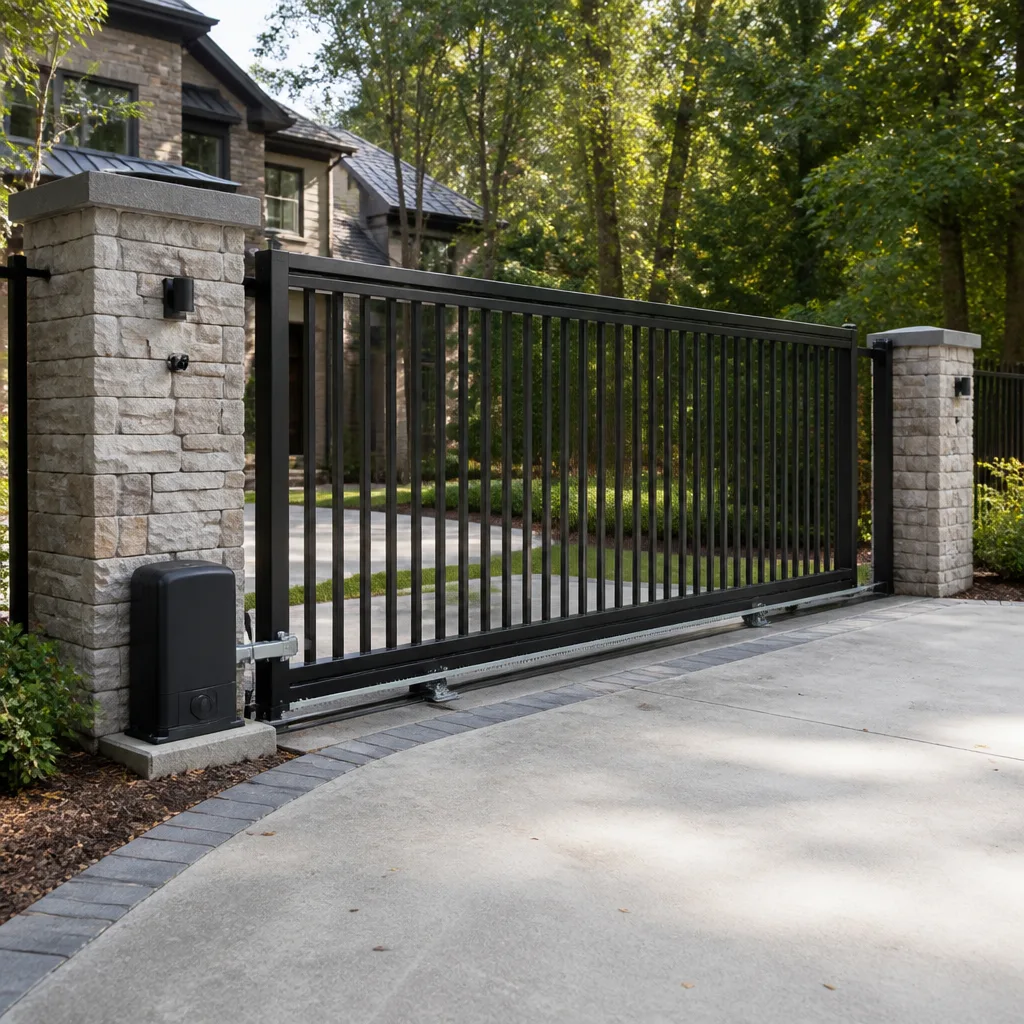
- Wheel and track repair (for slide gates): $250-$850
- Service call and diagnostic (applied to repair): $65-$145
The Most Common Gate Repairs and Their 2026 Price Ranges
The ranges below are real numbers from the Grand Prairie market in 2026, not national averages pulled from a website, and pair well with our Gate Repair Maintenance Checklist for Grand Prairie Homeowners. Use them as a sanity check against the quote in your hand. A quote that falls inside the range is probably fair. A quote that falls far outside it should come with an explanation that makes sense.
Hinge Replacement: $180 to $450
The most common repair on ornamental iron gates. When a gate starts to drag or the latch won’t line up, the hinge is usually the first thing to check. Grand Prairie clay soil puts lateral pressure on the post, the post leans slightly, and the hinge takes the load. What looks like a bent gate is often a failed hinge or a post that has shifted. A single hinge replacement runs $180 to $450, depending on whether the hinge is welded or bolted, whether the post needs shimming, and how much adjustment the gate needs to hang square again after it goes on.
Where your job falls in that range depends on access, weight, and condition. A lightweight 10-foot pool gate with a bolted hinge is the low end. A 400-pound ornamental iron driveway gate with a welded hinge that has rusted into the post is the high end. If the gate has been dragging for months, the lower hinge usually needs welding back into alignment too, not just replacing.
Post Reset: $350 to $900
A gate sags in the hinge post, not in the middle. When the post leans, the gate follows. In Grand Prairie, where the soil beneath a post alternates between dry summer clay and wet winter clay, posts that were set properly 20 years ago can still drift. A post reset means digging around the post, pulling it straight, re-setting it level and square, and securing it with new concrete. The range is $350 to $900. The spread comes from post size, how deep the original footer goes, and whether any fence section has to be temporarily pulled back to get access.
If a contractor quotes you a hinge replacement but never mentions the post, ask why. In our experience, eight times out of ten when a gate is dragging, the hinge is worn and the post has moved a little. Fix the panel without the post and you’ll fix it twice.
Weld Repair: $250 to $1,200
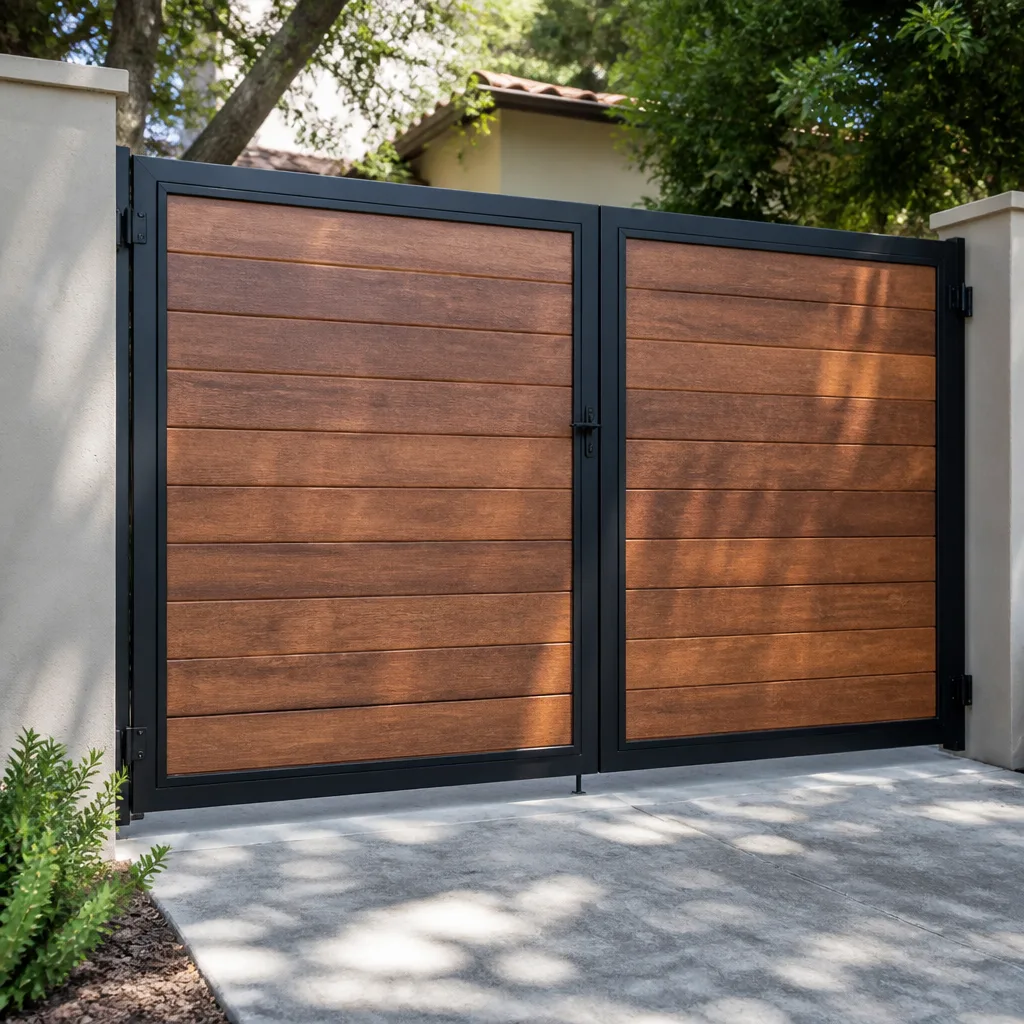
Cracked rails, broken pickets, a sagging corner that has pulled apart, a hinge that has torn loose from the frame. Weld repair is the most variable line item on the list because what looks like a simple crack often has more damage behind it once you grind the paint off and look. A single broken picket weld might be $250. A structural crack across the top rail where the gate hangs, requiring the gate to come off its hinges, get supported, ground clean, welded, and reinforced, runs $800 to $1,200. The job is labor-intensive, and the gate usually needs to be rehung and adjusted after the weld cools.
This is also where the difference between a welder who owns a truck and a gate shop that welds on site shows up most clearly.
Latch Replacement: $150 to $400
A gravity latch, a magnetic latch, a keyed deadbolt latch, a panic bar. The part costs $20 to $120. The labor is what makes the rest: drilling for a new strike plate, realigning the gate so the latch actually catches, and sometimes replacing the post-side receiver that has wallowed out from years of slamming. A straight latch swap on an existing alignment is the low end. A keyed latch on a heavy driveway gate that also needs hinge adjustment to sit right is the high end.
Opener Motor Replacement: $600 to $2,800
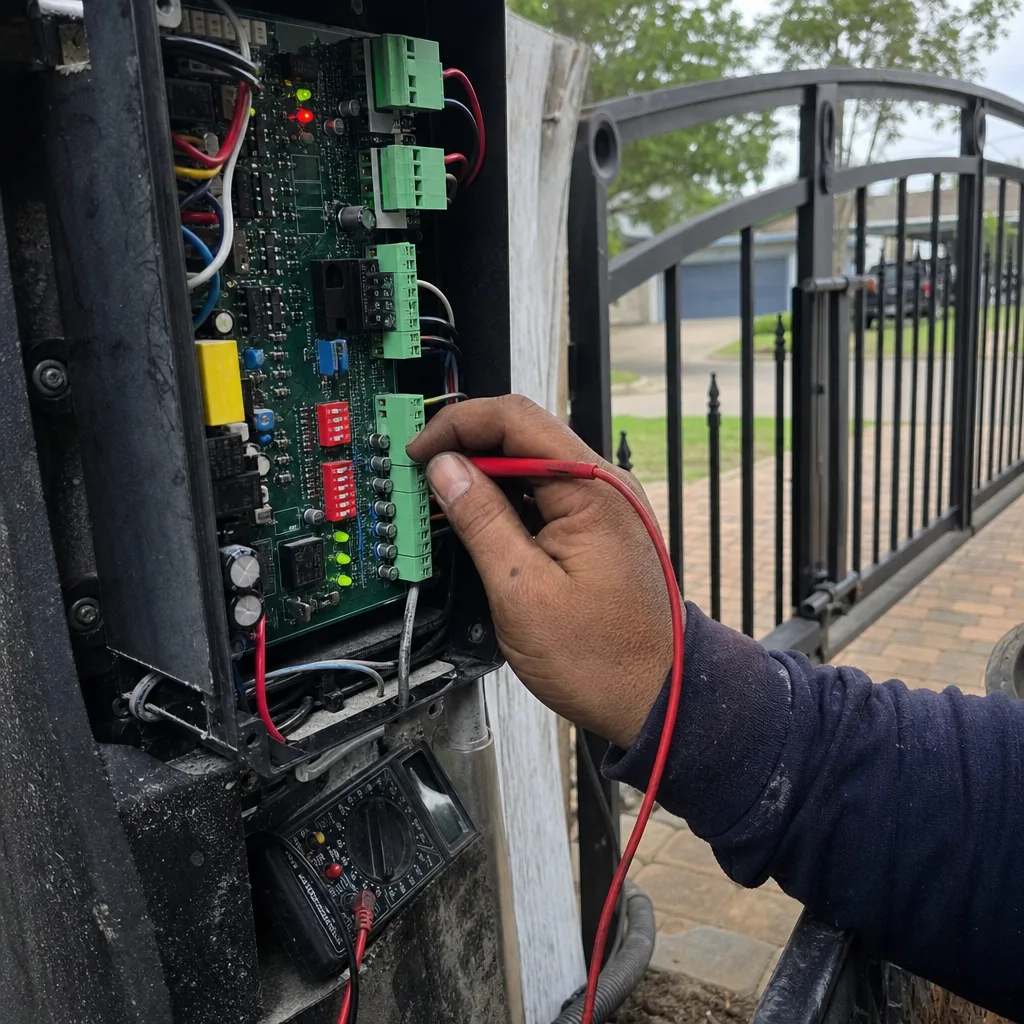
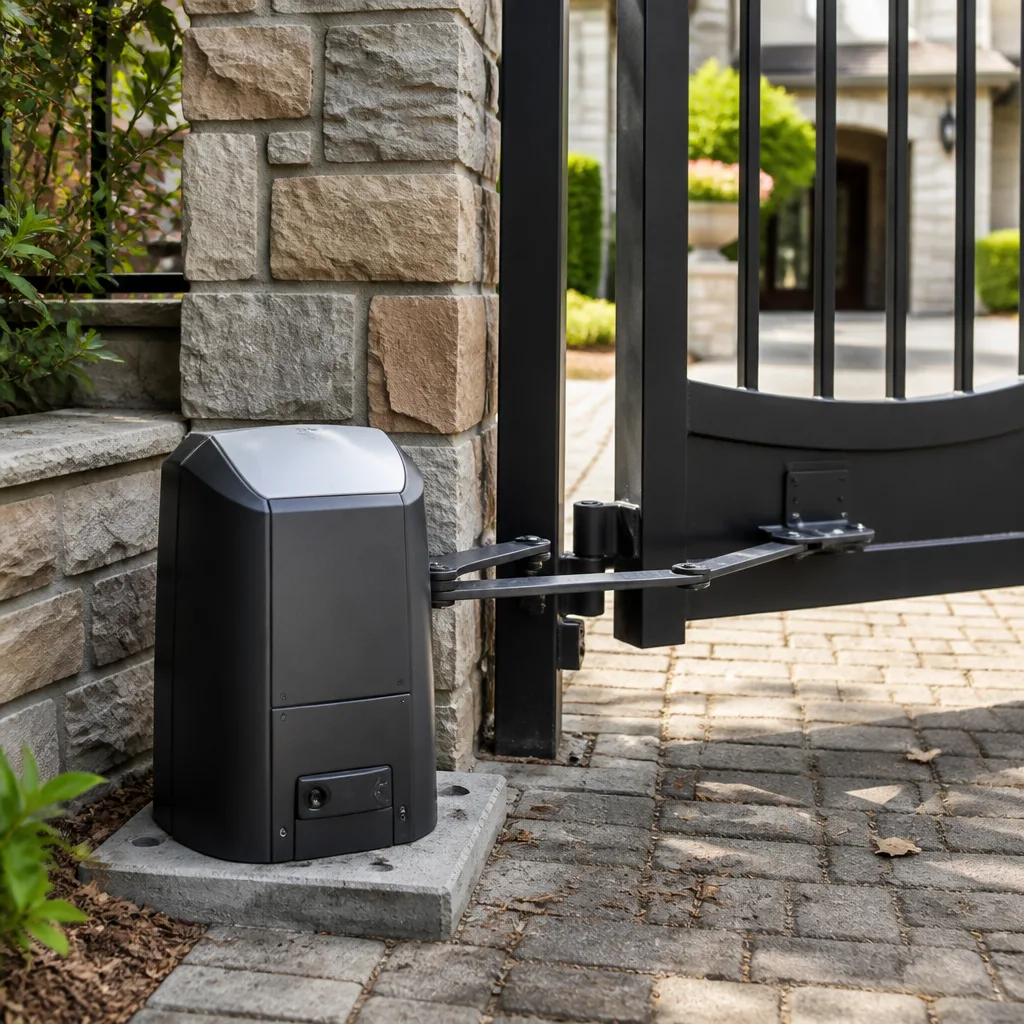
This is the repair that scares people, mostly because the range is wide and nobody explains what drives it. The motor itself, depending on brand and capacity, runs $300 to $1,500. Labor and programming add the rest. A small Ghost Controls single-swing opener on a residential gate is the low end. A DoorKing slide operator on a 20-foot driveway gate is the high end. In between sit Elite and Mighty Mule units and everything else. The cost also depends on whether the control board, remote receiver, and safety edges can be reused or need replacing at the same time.
If the motor has failed, ask the question no one asks: why did it fail. A motor that burned out because the gate was out of alignment and the operator was pushing against resistance will burn out the replacement too unless the gate itself gets straightened. A good gate repair company fixes the gate and then the opener. A parts-swapper just puts in a new motor and hopes the warranty clock runs out.
For a deeper look at motor and opener specifics, see our breakdown of gate motor and opener repair in Grand Prairie.
On-Site Welding vs. Fab-Shop Work: Why the Distinction Matters
If the repair involves welding on an ornamental iron gate, the single biggest variable in your quote is whether the contractor welds it in your driveway or hauls it to a shop. Both are legitimate approaches. They are not the same job, and they should not be priced the same.
On-site welding means the gate stays on its hinges. The welder positions, supports, grinds, welds, and cools the repair where the gate hangs. That matters because a gate that is welded off its hinges has to be re-hung and adjusted after it comes back, and the rehang is a separate labor charge that sometimes costs more than the weld. It also matters because a gate that gets loaded in a truck and driven across Grand Prairie can pick up new bends or stress cracks along the way, especially if it’s old iron.
Fab-shop work, by contrast, gets the gate onto a bench where everything is flat, clean, and easy to reach. The weld itself is often quicker and cheaper. But the customer pays for removal, transport, shop time, return transport, rehang, and adjustment. Those items are sometimes line-listed and sometimes hidden under a generalized “labor” number. The only way to know is to ask.
Here’s the honest math. A cracked rail weld that costs $150 in fab-shop labor might show up on the final invoice as $600 after removal, transport, and rehang. The same weld done on site, with the gate never leaving your hinges, might be $350 to $500 all-in. On structural repairs where the damage can be accessed on the ground, on-site welding usually wins. Where the gate is too heavy to safely support in place, or the damage requires a full-frame jig, shop work is the right call.
Most residential ornamental iron gates in Grand Prairie can be welded on site. The contractor telling you otherwise is not necessarily wrong. But if the quote for a simple weld includes three separate transport and handling line items, ask whether the gate can be welded where it hangs and what the difference would be. The answer will tell you more about the company than the price does.
Service Call Fees: What They Should and Shouldn’t Include
Every gate repair quote starts with some version of a service call fee. In Grand Prairie in 2026, that fee runs $65 to $145. What it includes is where the confusion starts.
Here’s what a fair service call covers:
- Travel to your property and the time spent getting there
- Diagnostic time: identifying the actual failure, not just confirming what you told them on the phone
- A written estimate that itemizes the repair and the price
Here’s what a service call should not be:
- A profit center. A $145 fee to look at a latch and tell you it needs replacing is a fee for showing up, not for knowing anything.
- Non-refundable regardless of whether you hire the company. That’s a hedge against their own uncompetitive pricing.
- Charged on top of the repair as pure add-on revenue. In our shop, the service call is credited toward the repair if you hire us. That’s not a gimmick. It’s just honest math.
When you compare two quotes, don’t compare the numbers on the bottom line blindly. Break each quote into three parts: service call, parts, labor. If one contractor charges a $140 service call that is credited toward the repair, and another charges zero service call but $140 more in labor, the prices are identical, and the first quote might be more honest about it. The question isn’t whether there’s a trip charge. The question is whether it is applied to the work or stacked on top of it.
Inside Grand Prairie and the surrounding county, we don’t charge a trip charge. That’s a standing policy, and it’s stated plainly, not buried in fine print. The price quoted before the job is the price on the invoice after the job.
The Honest Math on Repair vs. Replace
There is a number where repair stops making sense, and every homeowner should know how to find it for their own gate. The number is not a fixed dollar amount. It’s a ratio.
Take the value of the gate after it’s fixed. Ask yourself: if this gate were fully repaired and sitting in my yard today, what would it cost to buy and install brand new? For a standard ornamental iron driveway gate in Grand Prairie, that number is usually $2,500 to $6,000 installed. For a long driveway with an opener, it’s higher. For a small pedestrian gate, it’s lower.
Now take the repair quote. If the repair costs 50% or more of the replacement value, stop and think hard. That’s the point where you are buying half a gate. You get the old steel, the old post foundations, the old opener that will eventually fail, and a gate that has already shown you how it fails. A new gate comes with a new warranty, a new hang, and a new opener, and it’s squared from day one.
Here’s the step-by-step:
- Get a written repair quote, itemized.
- Get a written replacement quote from the same company, or a ballpark from two companies if you want a second opinion.
- Divide the repair quote by the replacement quote.
- If the ratio is under 40%, repair is almost always the right call. The remaining life in the gate is worth more than the money.
- If the ratio is between 40% and 60%, weigh the age of the gate, the condition of the opener, and whether the posts are solid. This is the judgment zone.
- If the ratio is over 60%, replace unless the gate has sentimental or architectural value that you can’t replace.
One more factor: the opener. A failing gate will kill an opener. If the gate is out of alignment and you are considering a $600 hinge and post repair on a gate that’s already wobbling, remember that the opener is the next failure point. A $600 repair that saves a $2,800 opener replacement is a bargain. A $600 repair that delays a $4,500 replacement by two years is not. The math changes with the condition of everything around the repair, not just the repair itself.
The 90-Day Warranty Math: Why the Cheaper Quote Can Cost More
This is the part most homeowners get backwards, and it costs them money. They line up two quotes. One is $480. The other is $540. They pick the $480 quote because it’s cheaper, and they never ask what happens if the repair fails in six weeks.
The warranty math looks like this. A contractor who gives you no written warranty, or who disappears three weeks after the check clears, has built his business model on the assumption that most repairs will outlast his customer’s memory. If the repair holds, you saved $60. If it fails, you’re paying full price for the repair again somewhere else. The expected cost of a $480 job with no guarantee is not $480. It’s $480 plus the risk of another $480. That’s $480 plus somewhere between $0 and $480, depending on the odds the job fails.
A contractor who gives you a real, written 90-day promise has a different incentive. If the job fails in three months, he comes back out of his own pocket. That means he’s motivated to do the repair right the first time, and to fix it if he didn’t. A $540 job with a functioning 90-day guarantee has an expected cost of $540, period. No hidden second charge. No “that failure isn’t covered” conversation.
Sixty dollars of difference in sticker price is not always savings. Often it’s the price of accountability, and the contractor who charges it is the one who answers the phone.
We put the 90-Day Done Right Promise in writing on every job, including repairs. If it’s not done right, we make it right. One call brings us back. That’s the whole deal. It’s not “up to” 90 days, and it doesn’t carve out edge cases. It’s stamped on the invoice.
If you are weighing quotes and one comes with a written guarantee and another doesn’t, stop comparing the bottom line. A $60 difference is almost always worth the guarantee. That’s not our opinion. That’s arithmetic.
Before you accept any quote, we recommend you understand what you are buying. Our Grand Prairie gate repair page walks through what we check on every call and what our pricing includes.
How to Read a Gate Repair Quote Line by Line
A good gate repair quote has five sections. A bad one has three: a big number, a vague description, and a phone number. For more guides & resources, see our blog. Here is how to read each part of a real quote.
1. The diagnostic line. What did they find, and how did they find it? A quote should say “hinge post has shifted approximately 1 inch, lower hinge barrel worn” not “gate repair.” You are paying for the diagnosis. If it’s not written down, you did not get one.
2. The parts line. What kind of hinge? What brand of opener motor? If it’s a part number, write it down and look it up. A $40 hinge listed at $40 is fair. A $40 hinge listed at $200 is not, no matter how you frame it. The same part number sold by five different contractors tells you everything about their markup.
3. The labor line. How many hours? How many people? Some contractors charge a flat labor rate per job. Some charge hourly. Both can be fair. What matters is whether the labor makes sense for the job described. A two-hour hinge replacement shouldn’t carry eight hours of labor.
4. The service call line. Is it listed? Is it credited? If the service call is listed as a separate charge and the repair is also listed, ask whether the service call is credited toward the repair. A company that applies it is not playing games. A company that stacks it is.
5. The warranty line. Is there a written guarantee? What does it cover? For how long? If the warranty section is blank or says “industry standard,” you have no warranty. A company that won’t write down what it will stand behind will not stand behind it later.
Finally, look at the bottom of the quote. Is the total number the same number you were quoted on the phone? If not, run it through the same line-item reading. A quote that changes at the door isn’t a quote. It’s a starting bid.
The price you’re quoted should be agreed before any work starts. That’s not a special feature. That’s the minimum standard for a licensed contractor in this trade.
What to Know About Ghost Controls, DoorKing, Elite, and Mighty Mule
If your gate is automated, the brand on the opener matters for parts pricing and repair feasibility. Here’s the plain version, without the marketing.
Ghost Controls makes residential swing and slide gate openers, and the brand has become popular in Grand Prairie because the kits are available at retail, which means homeowners often install them themselves. That’s fine, until the unit fails and the homeowner is stuck diagnosing a board, a limit switch, or a remote receiver. Ghost Controls parts are generally affordable and available, and the kit design makes component-level repair feasible for a pro who knows the units. If you have a Ghost Controls opener that has stopped responding, a board-level repair is usually cheaper than a full motor swap.
DoorKing is the old guard of gate operators, a commercial-leaning brand that ends up on a lot of larger residential driveway gates in Grand Prairie because they last. The trade-off is that DoorKing parts cost more, and the units are less forgiving of gate misalignment. A DoorKing operator that is working against a sagging gate will burn through a limit switch or a gearbox faster than almost anything else. If your DoorKing unit is failing and the gate is also dragging, fix the gate first, or the next opener repair is already scheduled.
Elite makes mid-range and higher-end residential operators, and they tend to be installed by gate companies rather than DIYers, which means the units are usually better integrated and better maintained. Elite parts pricing sits between Ghost Controls and DoorKing, and the brand has a reputation for reliable circuit boards and miserable remote programming. The repair is straightforward if you know the brand. If you don’t, you’ll burn an hour with the manual.
Mighty Mule is the entry-level solar and battery gate opener brand, common on farm gates and light residential gates around the edges of Grand Prairie. The units are inexpensive, and the repair economics follow that: sometimes the cheapest fix is a replacement board at $100, and sometimes the whole operator is $300 and it just makes sense to swap it. Mighty Mule units do not hold up to heavy daily cycling. If your gate opens 20 times a day, a Mighty Mule motor is a temporary solution, not a permanent one.
If your opener brand isn’t on this list, that’s fine. The pricing logic is the same. The motor model, the control board, the remote receiver, and the safety edges all affect the quote. A good repair company will tell you which component failed and why, not just that the unit is “bad.”
If you’re planning a full replacement instead of a repair, see our gate installation in Grand Prairie page for what a new gate should include and how to get a written price before the work starts.
Common Mistakes to Avoid
- Choosing the lowest quote without asking what’s missing. The contractor who charges $60 less is often the one who doesn’t carry a warranty, doesn’t answer the phone, and doesn’t come back. Cheap quote, paid twice.
- Letting someone replace the hinge without checking the post. In Grand Prairie’s clay soil, a sagging gate usually means a shifted post. New hinges on a leaning post will sag again in months.
- Accepting a verbal warranty. If the guarantee is not written on the invoice, it doesn’t exist. “We stand behind our work” is a sentence, not a warranty.
- Ignoring opener health when repairing the gate. A misaligned gate destroys opener motors. Fix the gate while the opener is still healthy, and you save the operator too.
- Signing a quote that says “labor” and nothing else. If the quote doesn’t itemize what the labor covers and how many hours, you don’t actually know what you’re paying for.
- Letting a contractor haul the gate to a shop for a simple weld. On-site welding is often cheaper because the transport and rehang costs vanish. Ask whether the weld can be done in the driveway before you agree to a shop job.
- Trying to fix high-tension springs or heavy gates yourself. A driveway gate can weigh 400 pounds, and a torsion spring under load stores energy that will break bones if it lets go. This is not a DIY line item. Call someone who does it for a living.
When to Call a Professional
Call a professional when the gate won’t close at all, when it drags on the ground, when the post is visibly leaning, when the opener grinds or shudders but won’t move the gate, when there’s structural cracking in the iron, or when the gate has started closing on its own. Show me the gate closing on its own and I’ll show you where it’s failing. These are not cosmetic issues. They are failures in progress, and they get more expensive the longer they wait. Anything involving high-tension springs, heavy lifting, or electrical wiring should be handled by someone who carries the proper tools and insurance, not a YouTube tutorial. Gatewood Fence & Gate offers free estimates in Grand Prairie, and the number is (903) 829-4499. A live person answers. That’s the whole point.
For an overview of what full-service Gatewood Fence & Gate covers, start at the home page.
Frequently Asked Questions
Most gate repairs in Grand Prairie fall between $180 and $1,200, with hinge replacement at $180 to $450, post reset at $350 to $900, weld repair at $250 to $1,200, and opener motor replacement at $600 to $2,800. The spread depends on the labor, the part, and whether the contractor carries a real warranty. Call (903) 829-4499 for a written quote on your specific gate.
The cheapest gate repair is usually a latch replacement or a single bolted hinge swap, typically $150 to $250 in Grand Prairie. Structural repairs like post resets or weld jobs cost more because the labor is heavier and the risk of doing it wrong is higher. If your gate is dragging, don’t assume the cheapest fix will last, which is why we look at the post and the hinge together.
Quotes vary because contractors set their own labor rates, part markups, and warranty policies. Some charge a low headline price and stack on service fees, transport, and rehang charges. Some charge more up front and stand behind the work. The spread you see between quotes is usually the difference in accountability, not the difference in parts. Ask for an itemized quote and read it line by line.
Repair is worth it when the repair costs less than about 40 to 50 percent of what a new gate would cost installed. Above that, you’re buying half a gate with old foundations and an old opener. Get a written repair quote and a written replacement quote, divide one by the other, and decide with numbers instead of a contractor’s advice.
Inside Grand Prairie and the surrounding county, we don’t charge a trip charge. That’s not a special. It’s how we’ve always priced work. The price you’re quoted is agreed before any work starts, and the estimate is free.
Yes, and on most ornamental iron residential gates in Grand Prairie, on-site welding is the better and often cheaper option. The gate stays on its hinges, we support it properly, we weld it where it hangs, and there’s no transport or rehang charge. If your quote includes shop transport for a simple weld, ask about doing it on site.
The Bottom Line
Gate repair pricing in Grand Prairie is not mysterious. It’s three numbers: labor, markup, and warranty. Read the quote line by line, ask whether the post was checked when the hinge is quoted, ask whether the weld is being done in your driveway or a shop across town, and divide the repair cost by the replacement cost before you decide. The cheapest quote is not the cheapest job when it fails in six weeks with nobody to call. The name is on the shop, and the shop is down the road. That is the oldest accountability there is, and it stacks up well against a low number in a text message.
Written by Hal Gatewood, Owner at Gatewood Fence & Gate, serving Grand Prairie since 2001.