
Last updated August 26, 2026
Free on-site gate assessment - hinges, posts, and your LiftMaster or Nice gate operator checked before anything is quoted
The assessment is free and the quote is the invoice.
Farm & ranch
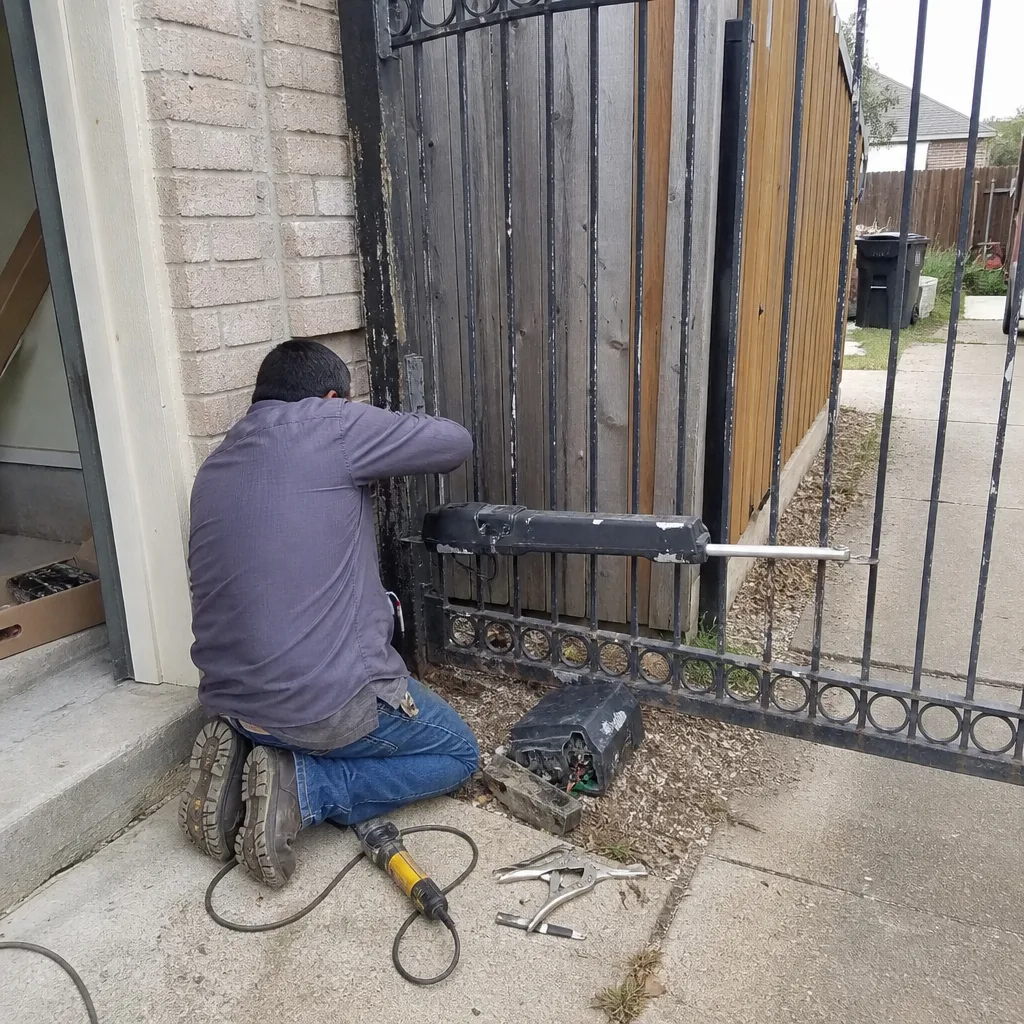 Before
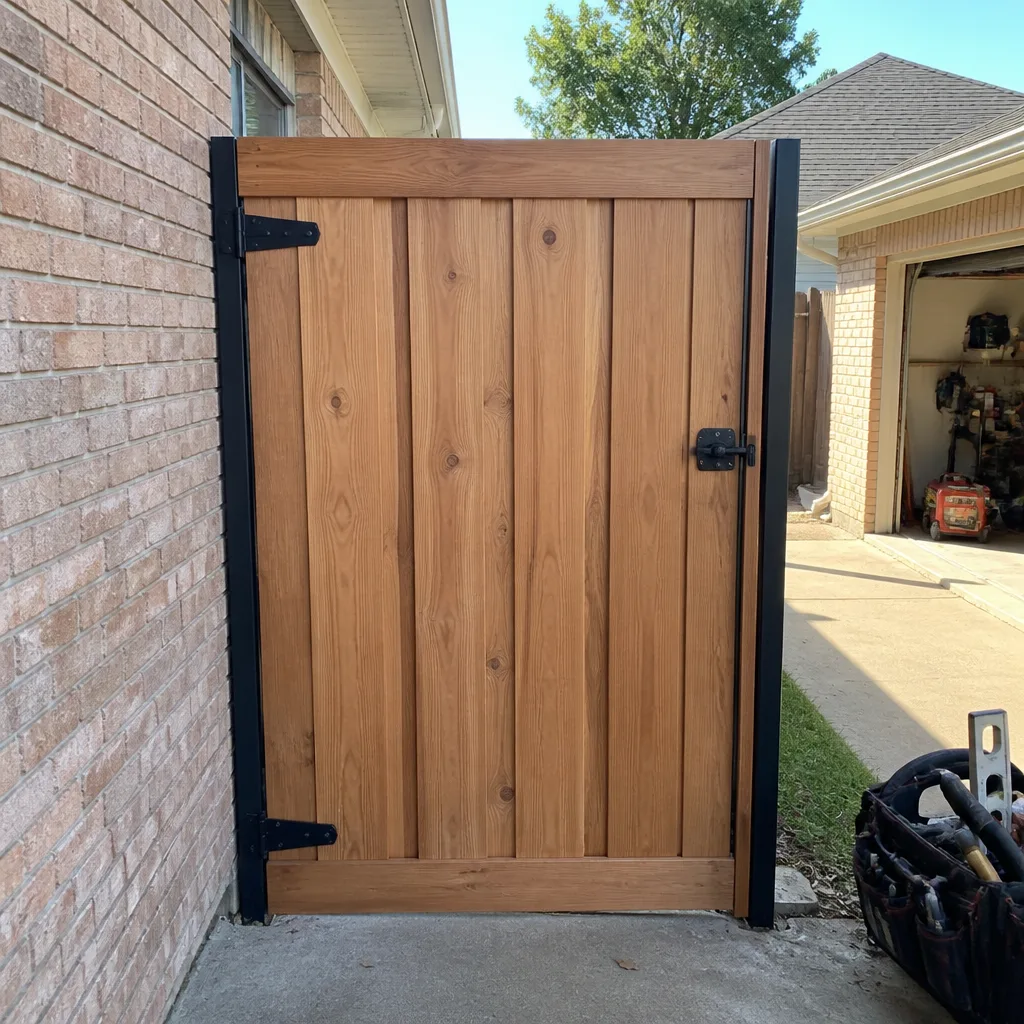 After
After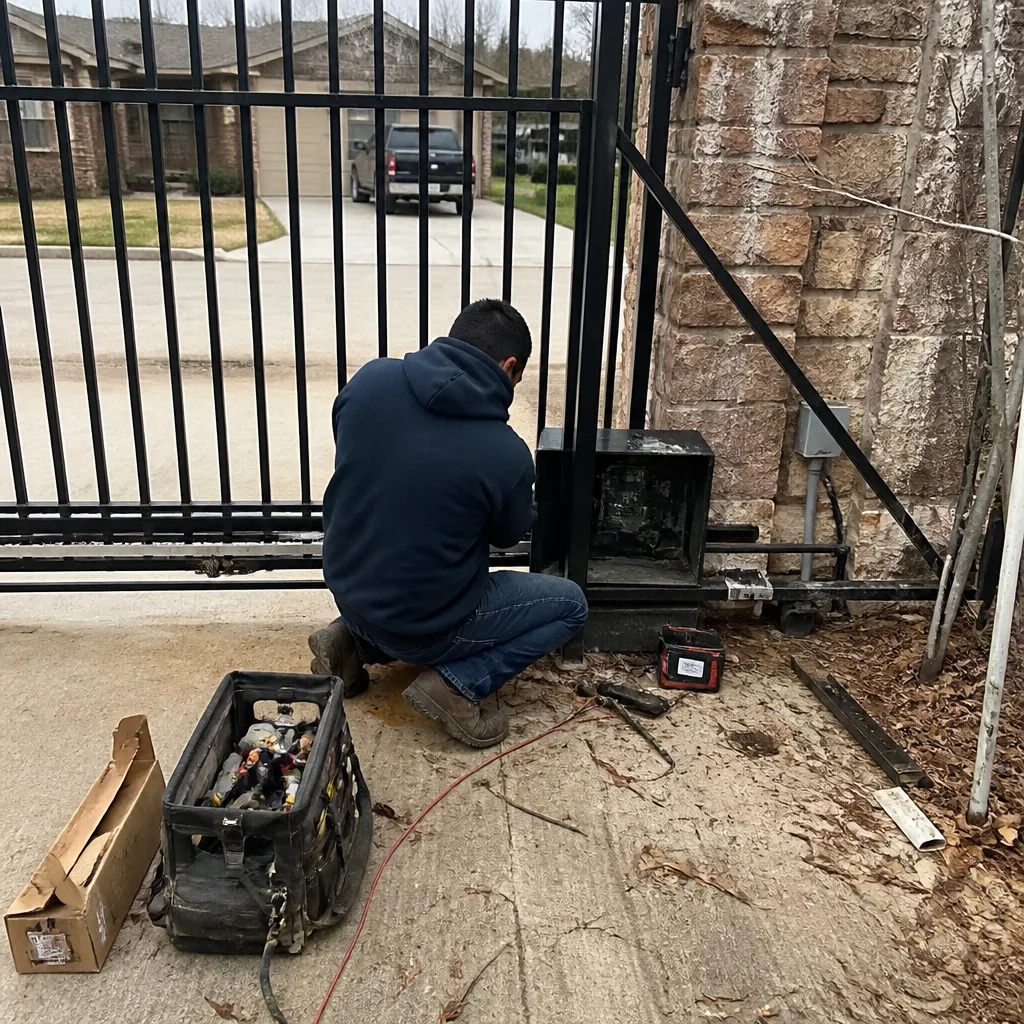 Before
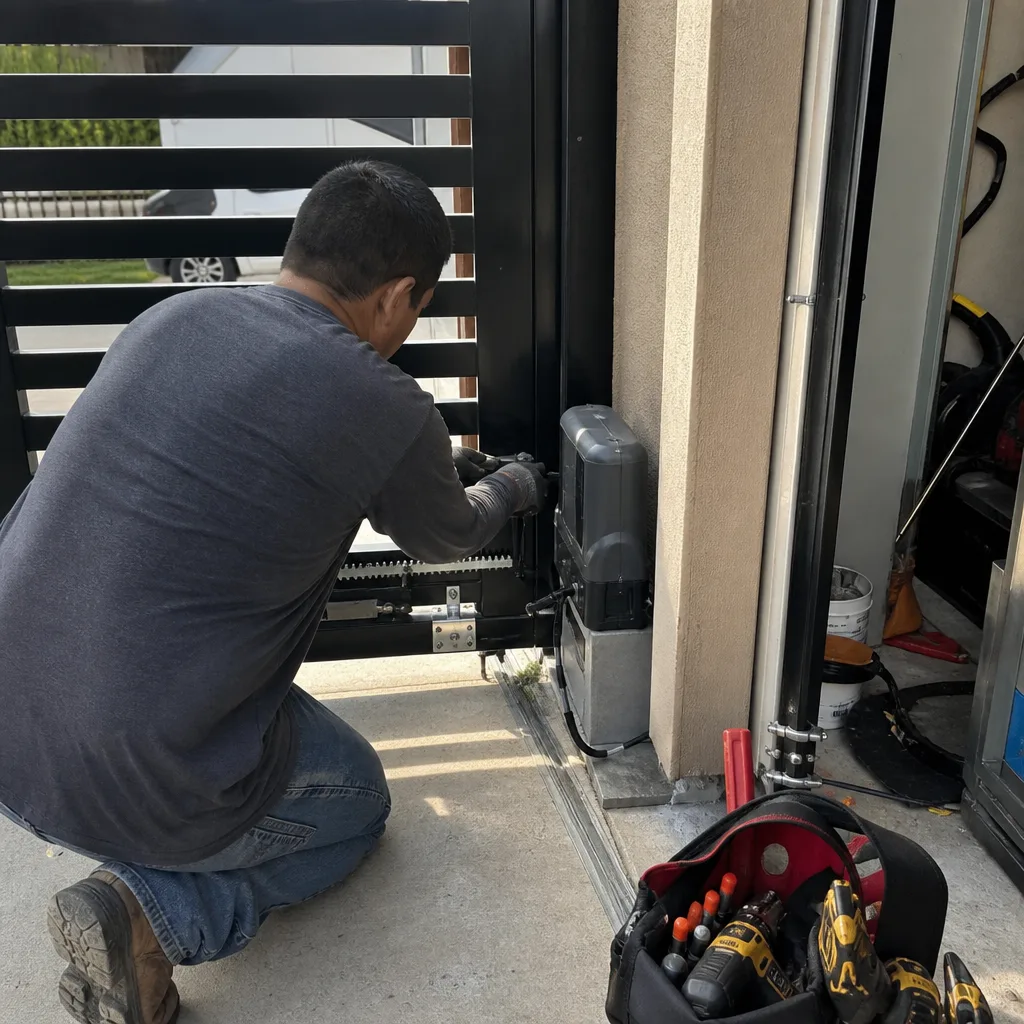 After
After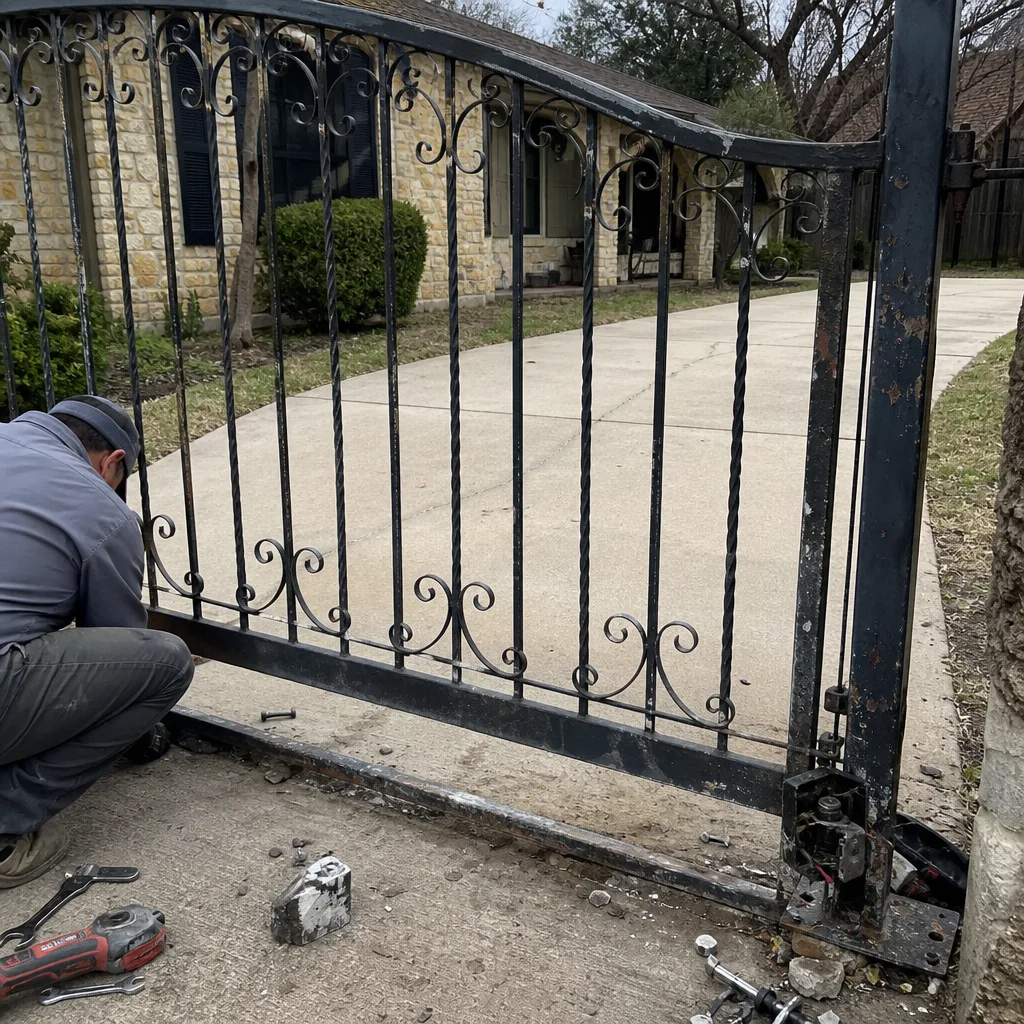 Before
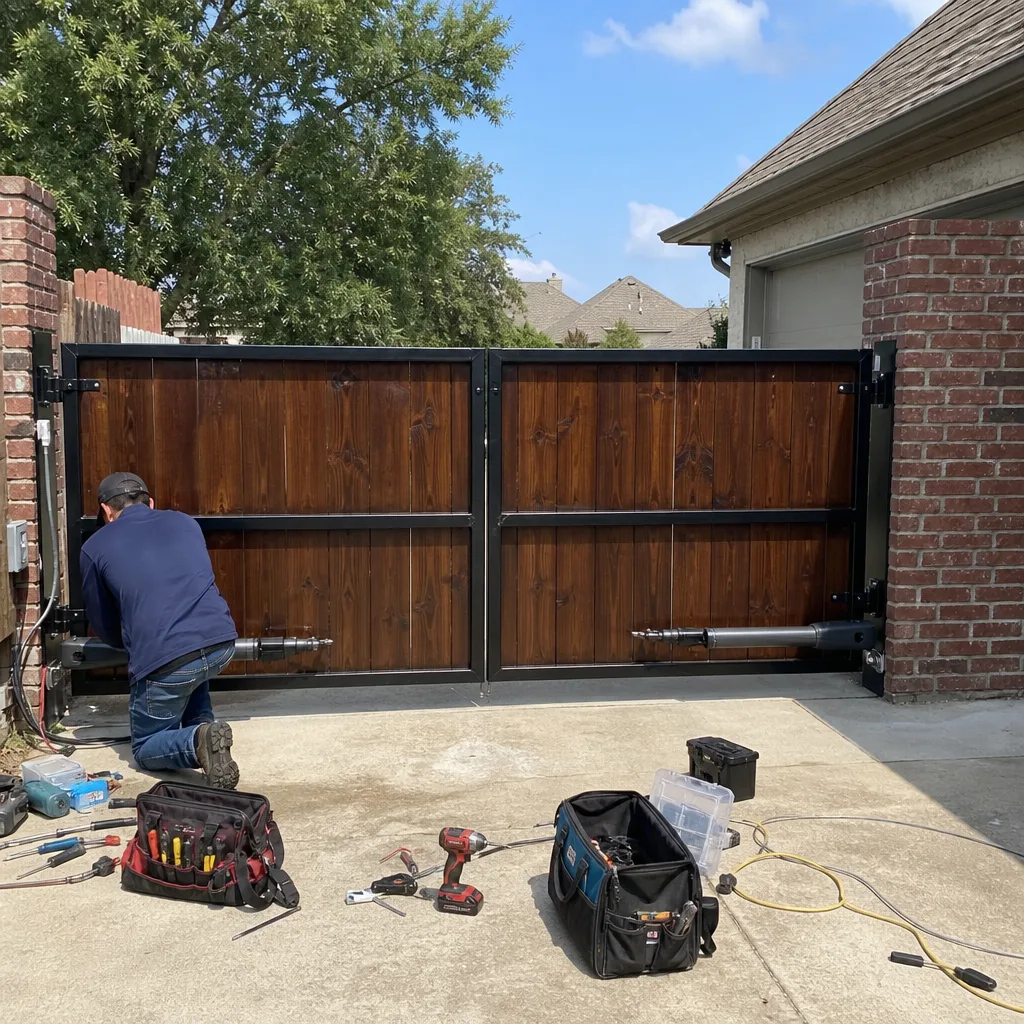 After
AfterThe Complete Guide to Gate Repair in Grand Prairie
Hal has pulled up to jobs in Grand Prairie where a homeowner just spent $1,800 on a brand-new gate because the last guy told them the old one was “too far gone.” Then we find the real problem: a cracked weld that would have cost $175 to fix on-site. That happens more than it should. This guide covers every gate type, every common failure, and what our Gate Repair services actually look like from start to finish. Learn it once, and you’ll spot the difference between a hinge fix and a full replacement before you spend a dime.
Quick Answer
Most gate problems in Grand Prairie trace back to three root causes: post movement from expansive clay soil, hinge or weld fatigue from years of North Texas heat cycles, and opener misalignment caused by frame racking. A thorough repair starts by identifying which of those three is actually failing, then fixing the root cause rather than the symptom. In our experience, roughly 7 out of 10 gates that get quoted for replacement can be repaired for a fraction of the cost.
Table of Contents
- The Gate Types You’ll Find Around Grand Prairie
- How Grand Prairie Clay Soil Causes Gate Failure
- The Three Root Causes Behind Most Gate Repairs
- Repair vs. Replace: What Each Gate Material Really Needs
- What On-Site Welding Can Salvage
- How Gate Openers Interact With Frame Damage
- What a Thorough Gate Inspection Covers
- What Gate Repair Costs in Grand Prairie
The Gate Types You’ll Find Around Grand Prairie
Grand Prairie is a mix of older ranch-style homes from the 60s and 70s, newer subdivisions along the 161 corridor, and a few acreage properties on the southeast side. Each style tends to have its own gate type, and each gate type fails in its own predictable way.
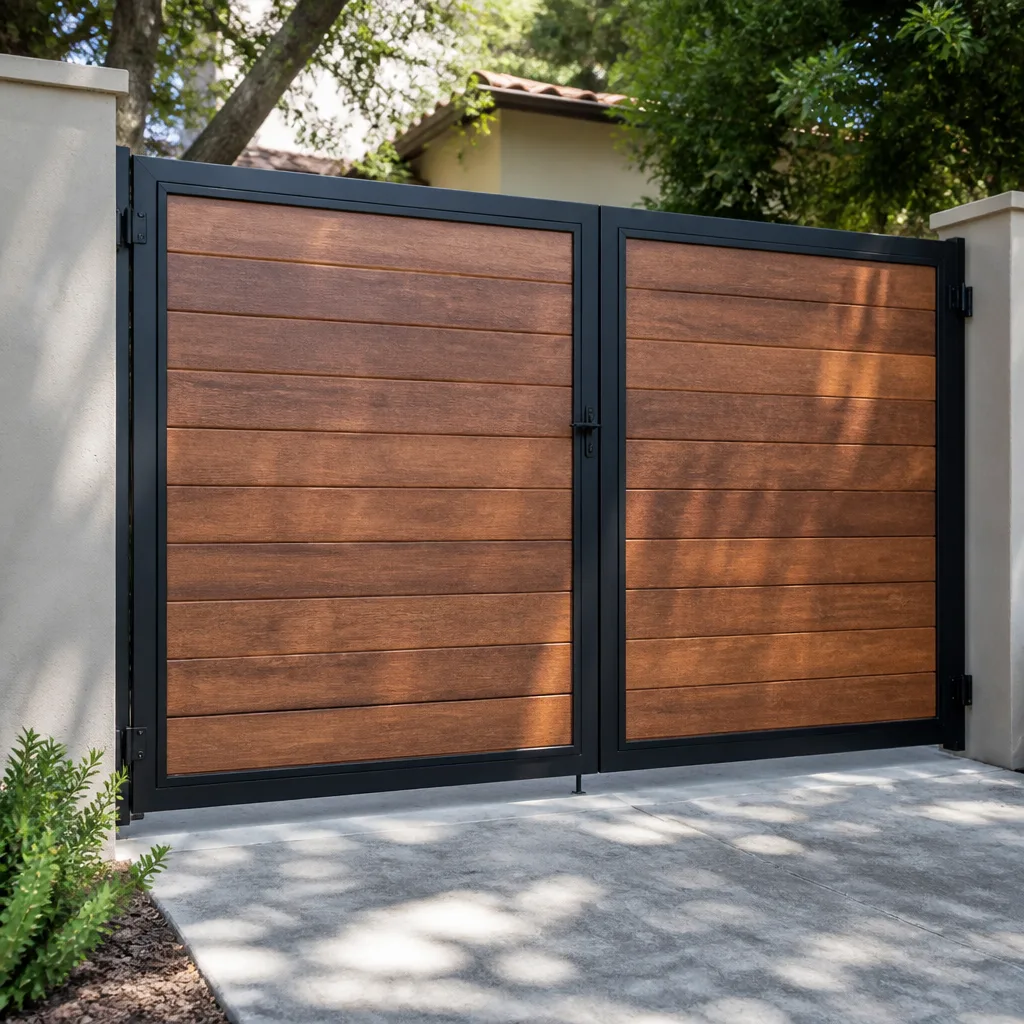
Wood gates. Most wooden driveway gates in Grand Prairie are cedar or pressure-treated pine. Cedar resists rot but splits easily when hinges pull against dry wood. Pine holds fasteners better but swells in humid springs and shrinks in July heat. The leading failure point on a wood gate is almost always the top hinge side: the post moves, the panel torques, and the screws wallow out until the gate drags on the ground. The panel itself is usually fine.
Wrought iron and steel gates. Iron gates in Grand Prairie are common on older properties and ranch-style entries. Steel and iron hold up to weather better than wood, but their welds fatigue. A gate that opens and closes 40 times a day cycles a few thousand times a year, and every cycle flexes the welded joints. After 10 or 15 years, those flex points crack. The gate itself is not worn out; the welds are. That is exactly the situation where on-site welding beats replacement every time.
Aluminum gates. Aluminum is the default choice in newer Grand Prairie subdivisions because it doesn’t rust and weighs less. The tradeoff is that aluminum bends rather than springs back. Hit it with a mower, back into it with a trailer, let a teenager swing on it, and the frame takes a permanent bow. Aluminum also cracks along the hinge mounting plates when the post moves, because aluminum doesn’t like vibration or repeated flex.
Chain-link gates. Chain-link is common in Grand Prairie’s backyards, pool enclosures, and side yards. These gates fail at the tension band, the hinge bolts, or the post-top brace. They’re relatively quick to repair, but a chain-link gate with a sagging frame will chew through hinge bolts every few months until the frame is re-tensioned.
If you’re ready to compare your options before deciding on a repair, our Gate Repair in Grand Prairie page breaks down common repairs by material and what each costs on average.
How Grand Prairie Clay Soil Causes Gate Failure
Grand Prairie sits on the Eagle Ford Shale formation, which means the soil here is mostly heavy clay with some limestone float. That clay expands when it’s wet and contracts when it’s dry. The expansion pressure is strong enough to heave concrete flatwork, crack foundations, and push fence posts out of plumb by three or four inches over a single wet winter.
Here’s what that does to a gate:
Post heave. When the soil swells, the hinge post rises. When it dries out in August, the post settles back, but never exactly to the same spot. Over five or six seasons, a 4×4 wooden post or a steel post set in concrete will list enough that the gate no longer meets the latch. The gate didn’t sag; the post walked. That distinction matters, because fixing the panel without resetting the post means fixing it again next year.
Frame racking. A driveway gate that spans 12 or 14 feet is long enough that minor post movement at either end translates into a visible twist in the gate frame. The latch side droops, the top rail pulls out of square, and the gate starts binding against the ground. Homeowners often call it a hinge problem or a bent gate. Usually, the frame is square and the ground moved underneath it. Straightening the frame is a weld-and-brace job; replacing the panel is rarely necessary.
Opener confusion. When the frame racks, the automatic opener’s travel limits no longer match the physical gate. The gate doesn’t open all the way or closes too hard or reverses mid-cycle. The openers from LiftMaster and Mighty Mule are not designed to fight a racked frame; they’re designed to stop you from crushing a kid or a car. So they trip, reverse, and beep, and a homeowner thinks the opener is bad. Half the time, the opener is just doing its job against a frame that needs welding.
Knowing the soil here means we start every Grand Prairie gate repair at the posts, not at the latch. Gatewood Fence & Gate home has served this area since 2001, and we’ve seen every version of this same story.
The Three Root Causes Behind Most Gate Repairs
Here’s the core we tell every customer in Grand Prairie: almost every gate failure traces back to one of three things. Learn to identify which one is happening, and you’ll know what a fair repair should cost and what should not be on the quote. For DIY vs Professional Gate Repair: The Grand Prairie Homeowner’s Decision Guide, see our breakdown of when to call a pro.
Root Cause 1: Post Movement
The gate hangs from the hinge post. When the hinge post moves even an inch out of plumb, the entire panel loses alignment. The latch side drops, the gate scrapes, the wheels drag, and every component works harder. In Grand Prairie’s clay, post movement is the single most common underlying cause of gate repair calls. The fix is digging out around the post, re-setting it in concrete with an anchor base, and re-hanging the gate. On steel posts, the repair may include welding a buried cross-plate or adding a concrete collar below grade to resist future heave.
Root Cause 2: Hinge and Weld Fatigue
Every gate is a lever, and every lever concentrates force at its hinge points. A 400-pound steel driveway gate puts constant shear force on the hinge welds and the hinge fasteners. Toss in North Texas heat that cycles metal through 40-degree temperature swings daily, and those connections fatigue. The gate doesn’t fail all at once; hairline cracks appear at the weld toe, then propagate. A gate that wobbles when you push against it is telling you the hinges or the frame welds are exhausted. This is where on-site welding actually saves the gate: grind out the cracked weld, re-weld the joint, add a gusset plate, and the gate is operationally sound again.
Root Cause 3: Opener Misalignment
Automatic gate openers push, pull, or swing the gate through a predictable geometry. When the gate’s frame is racked from soil movement or a bumped post, that geometry shifts. The opener starts working against a twisted panel, so it stalls, reverses, overheats, and eventually burns a limit switch or a control board. If someone replaces the board without adjusting the gate frame, the new board fails the same way six months later. A proper repair fixes the frame first, then re-times the opener.
Repair vs. Replace: What Each Gate Material Really Needs
Here’s the question every Grand Prairie homeowner should ask when a quote shows up: is the gate material itself used up, or is the hardware around it used up? Most materials have a long service life in North Texas, and replacement is almost always a hardware problem in disguise.
Wood gates. A cedar gate in Grand Prairie can last 20 to 25 years if the hinge post stays plumb and the panel gets sealed every few years. The failure that kills wood gates early is water wicking into the end grain at the bottom rail. When the bottom rail starts to feel soft or you can push a screwdriver into it, replacement is legitimate. If the panel is rock solid but the gate drags, save your money: the post moved, the panel didn’t rot.
Iron and steel gates. Steel and iron frames have a 30-to-50-year lifespan in North Texas, even unpainted. Surface rust is cosmetic; through-thickness rust that flakes off in sheets is structural. A rusty gate that is still square is usually salvageable with grinding, welding, and a good enamel topcoat. A gate that has rusted through at the rails or has a cracked weld at the post side needs repair, not replacement. Gate Installation in Grand Prairie is useful when the panel is undersized, the style has changed, or the rust has eaten through the frame itself.
Aluminum gates. Aluminum doesn’t rust, which means it lasts. A bent aluminum frame, though, can’t always be straightened without leaving a fatigue point. Minor bowing can be manipulated back with judicious force and gussets. A hard crease is a crack waiting to happen, and replacement is the safer call at that point.
Chain-link gates. Chain-link gates are cheap to build and cheap to repair. The fabric lasts 15 to 25 years depending on coating. The failure is at the connection points: tension bands, hinges, post caps. Replacing the gate because a tension band slipped is like replacing a car because the lug nuts loosened. Repair it.
What On-Site Welding Can Salvage
Here’s the part most gate repair companies in Grand Prairie won’t tell you: they don’t weld. They replace. That’s why the quotes lean toward new gates every time. Hal has been welding on-site since 2001, and we have fixed gates in driveways that had been condemned by other companies.
On-site welding means the gate stays in your driveway. We bring the welder, the grinder, the clamps, and the steel stock. Here’s what that approach tends to salvage:
- Cracked frame welds. A drive gate with a cracked top-rail-to-stile weld is a 45-minute repair with the gate still hanging. Grind the crack, fill it, cap it with a gusset plate, and the gate is stronger than the day it was built.
- Sagging steel panels. A 14-foot gate that has dropped two inches at the latch side usually has a pulled weld or a hinge post that moved. Re-weld the frame square at the top rail, re-hang the panel, and the sag is gone.
- Broken hinge pins and plates. When a hinge plate tears off a steel gate, a replacement gate is one option. Weld a new, thicker plate to the frame is the other. That costs about $150 and keeps a $2,000 panel out of the landfill.
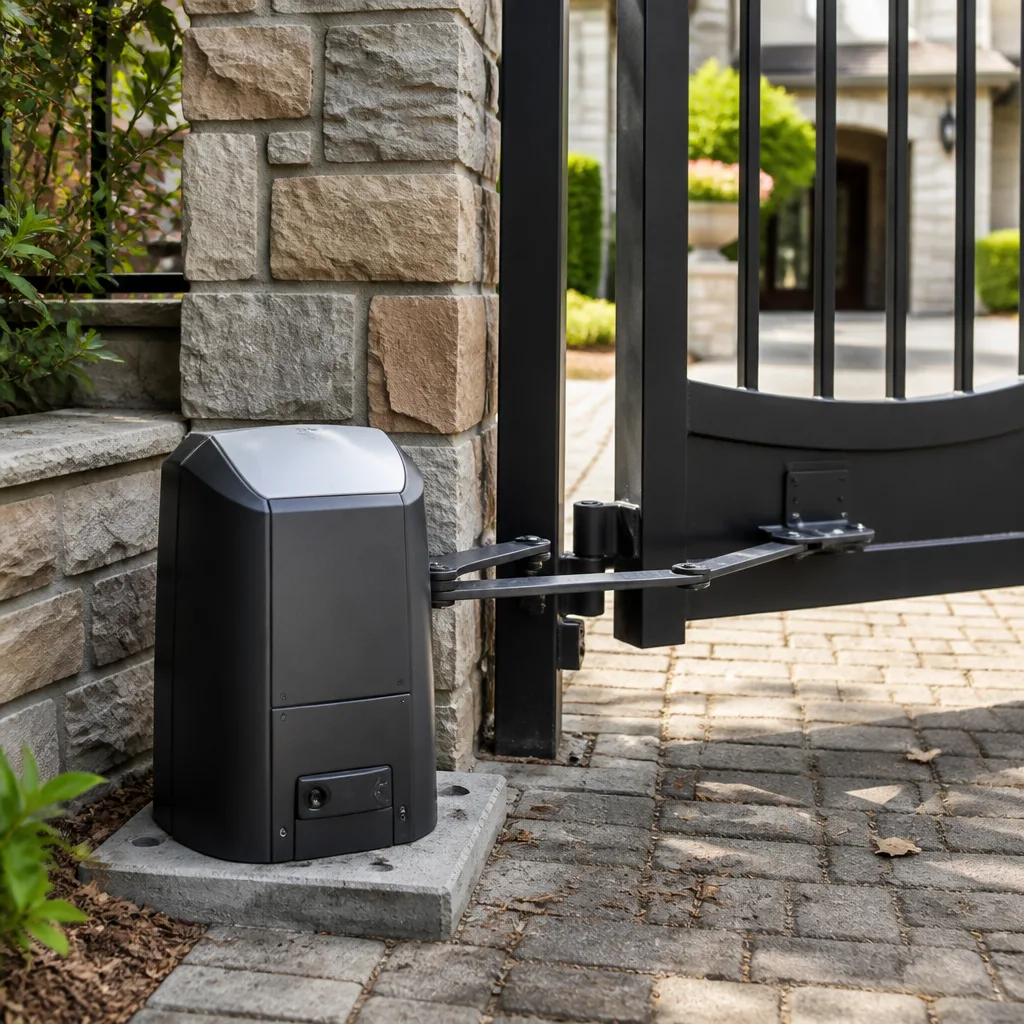
- Opener brackets. The brackets that connect FAAC or BFT openers to the gate often crack at their weld beads. We cut the old bracket off, weld a new one on, and re-time the opener. The opener itself is untouched.
- Custom modifications. If the ground has settled and the gate needs two more inches of clearance, we’ll weld a new bottom rail or add a steel kick plate. No need to order a shorter gate.
Some things genuinely can’t be saved: a steel frame with rust through the main rails, a wood panel with advanced end-grain rot, an aluminum frame with a creased rail. But the list is short. If a quote jumps straight to “you need a new gate” without explaining why the old one can’t be welded, get a second opinion. We will give you one free, and that is not a sales trick. Call the shop, bring us the written estimate, and we’ll look at the gate with you.
How Gate Openers Interact With Frame Damage
An automatic gate opener is a machine that senses resistance and responds to it. When the gate frame is straight and the hinge points are true, the opener moves the gate with predictable force and stops when it hits its limit. When the frame is racked, the opener starts fighting the gate’s geometry, and three things happen in sequence:
- The opener draws more current to push a dragging gate, which shortens its service life.
- The safety circuits trip because the gate is binding, which causes the reversing and beeping homeowners hate.
- The limit switches burn out or the control board overheats, which means a component fails that was never the actual problem.
We see this routinely with LiftMaster and Mighty Mule openers on Grand Prairie driveways. A homeowner has replaced the board once, maybe twice, and the gate still misbehaves. Then we find the hinge post has settled two inches and the frame is dragging on the driveway edge. The opener is fine. The gate is fine. The ground moved, and the opener is the canary in the coal mine. This is why Gate Motor & Opener in Grand Prairie service starts with the gate itself, not the control box.
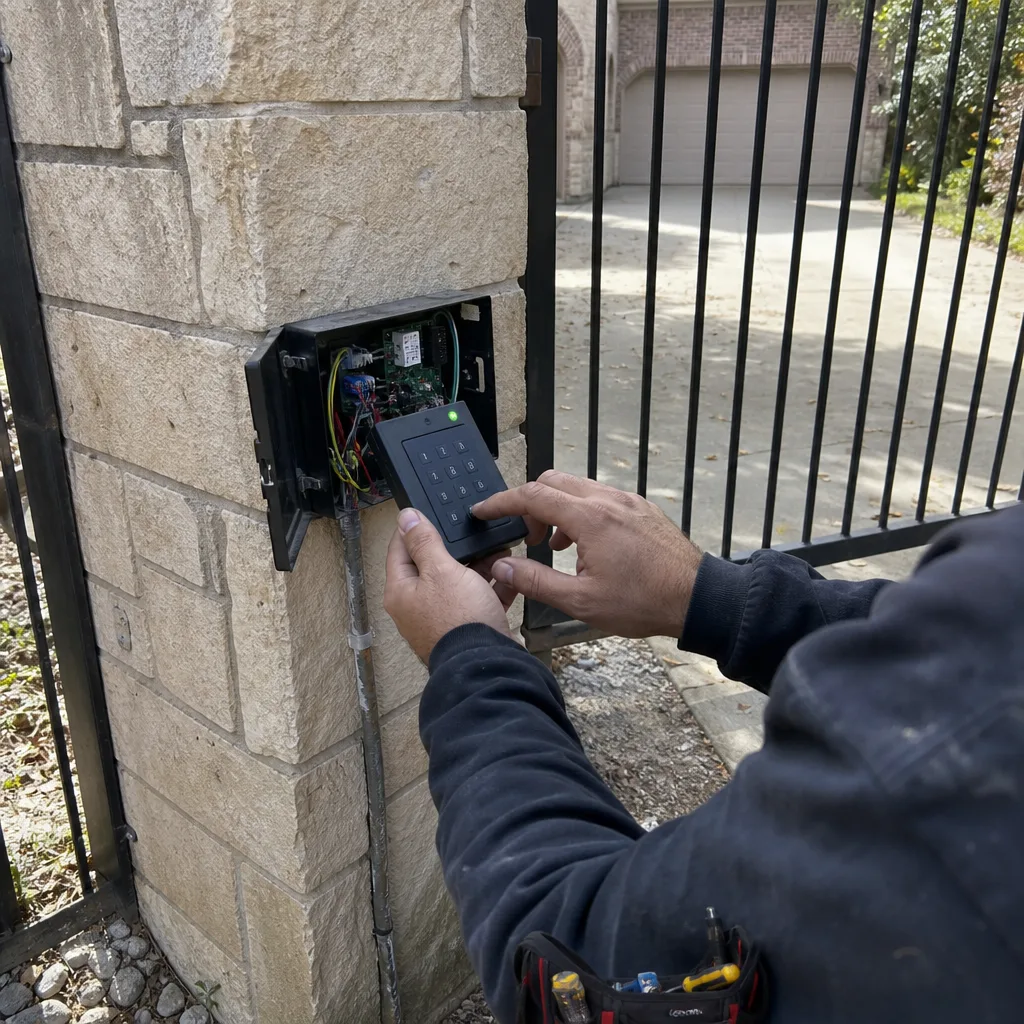
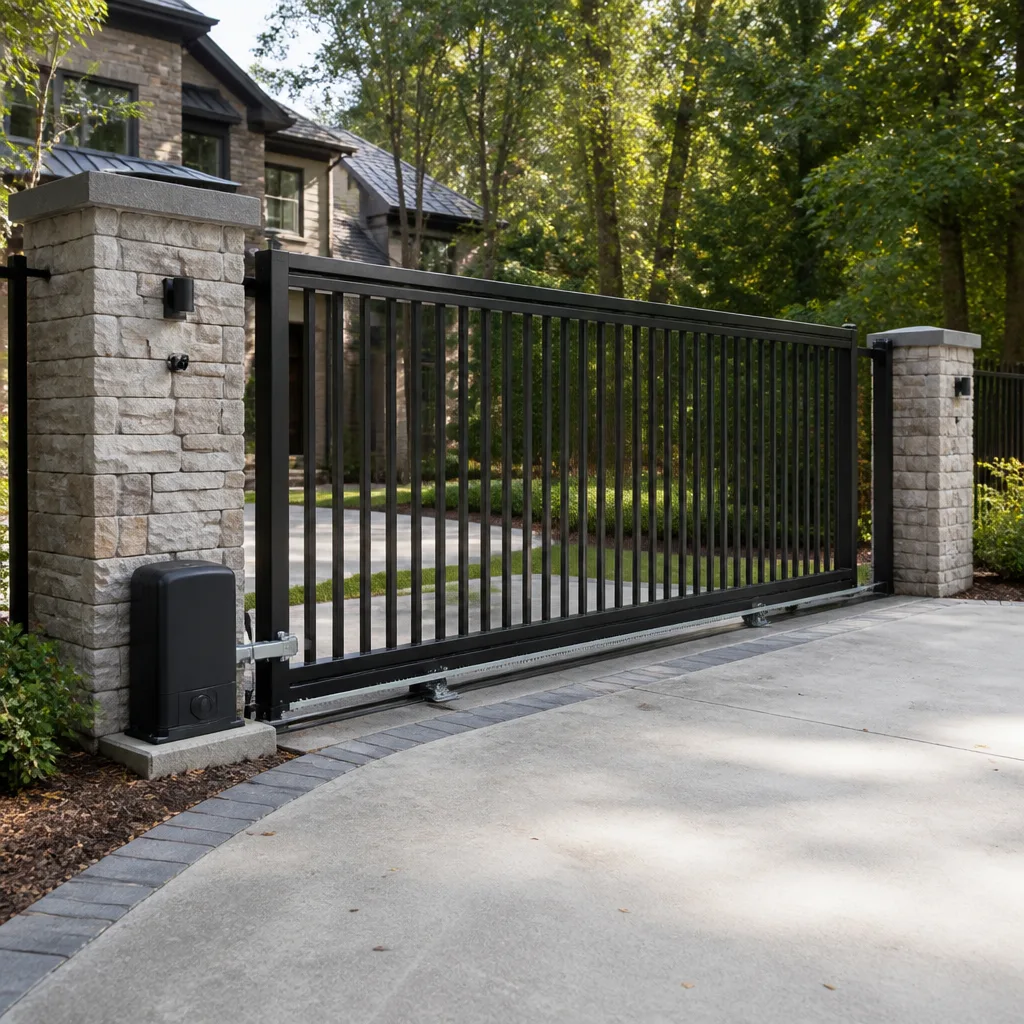
When we repair an opener, we check the mechanical side first: post plumb, hinge slop, frame square, track alignment for sliding gates. If any of those are off, we fix them before touching the opener. Only after the gate moves smoothly by hand do we re-time the opener, set the force limits, and test the safety eyes. That is the sequence, and it’s the reason our opener repairs don’t come back.
What a Thorough Gate Inspection Covers
A legitimate gate inspection takes 30 to 60 minutes, not ten. Here’s what any real gate repair professional, including our crew, should be checking when they quote a repair in Grand Prairie:
- Post plumb. Check both hinge post and latch post with a level, and check for signs of movement in the surrounding concrete pad or soil. A post that has moved is the starting point for most decisions downstream.
- Hinge slop. Lift the gate near the hinge and rock it. Any play indicates a worn barrel hinge, elongated bolt holes, or a cracked hinge plate. This must be distinguished from panel movement elsewhere.
- Frame square. Measure the diagonal across the gate corners. A rectangular frame racked out of square by more than a quarter inch indicates post movement or weld fatigue.
- Weld inspection. Run a grinder over the painted welds (or a wire brush if you’re not prepared to repaint). Hairline cracks are visible at the weld toe; these are the joints that will fail next.
- Latch and strike alignment. The gate should close and the latch should catch without pushing or lifting the panel. If the homeowner has to lift the gate to close it, something is wrong with the hinges or the post.
- Opener cycle test. Run the opener through a full open and close while watching for hesitation, reversal, grinding, or over-travel. A properly adjusted opener should be smooth in both directions.
- Safety edge and photo eyes. Block the photo eyes and make sure the gate stops and reverses. Check the contact edge, if equipped, to make sure it triggers when compressed.
- Ground clearance. The gate should clear the driveway by at least an inch at all points across its swing path. A dragging gate tells you the post moved or the frame has racked.
If the person quoting your repair didn’t put a level on the post or measure the diagonals, they didn’t inspect the gate. They estimated. There’s a difference, and that difference shows up in the final bill.
What Gate Repair Costs in Grand Prairie
Here’s a straight answer, because we believe in saying the price out loud. Gate repair in Grand Prairie runs from about $120 for a hinge replacement on a chain-link gate to about $2,400 for a full frame re-weld and opener re-timing on a large steel driveway gate. See our Gate Repair Cost Breakdown: The Grand Prairie Homeowner’s Reference for 2026 for detailed pricing by repair type. Most repairs land between $200 and $700. The range is wide because the labor depends on the gate’s size, the material, and the condition of the post.
Typical repair line items, as of 2026 in Grand Prairie:
| Repair Item | Typical Price Range |
|---|---|
| Chain-link hinge replacement, 2 hinges | $120 - $180 |
| Wood gate hinge and latch re-alignment | $150 - $250 |
| Steel gate weld repair, single crack | $175 - $300 |
| Post reset, wooden or steel hinge post | $300 - $600 |
| Frame re-weld with gusset plates, full gate | $400 - $800 |
| Opener bracket replacement and re-time | $350 - $600 |
| Full frame re-alignment with post reset and welding | $900 - $2,400 |
Every quote we write is the price you pay. It’s agreed before any work starts, and if the repair uncovers something new, we stop and talk to you before spending another dollar. The standing offers are simple: $40 off any repair over $200, no trip charge inside Dallas County, a free second opinion on any written estimate, and a permanent 10% discount for seniors and veterans. No haggling. That’s the price, and the price is the price.
Common Mistakes to Avoid
- Ignoring a dragging gate. A gate that drags is working against the driveway, and the constant friction accelerates every other failure. Fix it at the first scrape, or budget for a larger repair later.
- Replacing a gate without checking the post. The panel wasn’t the problem, the post was. Buying a new gate and hanging it from the same leaning post is a guarantee that you’ll replace it again.
- Lubricating a worn-out hinge. Grease is not a repair. If the hinge has slop, adding lubricant just makes it slop faster. Replace the hinge, then lubricate the new one.
- Letting a company haul your gate to their shop. In Grand Prairie, a gate that leaves your driveway is a gate you can’t watch being repaired. On-site welding means accountability that a shop repair doesn’t have.
- Buying a controller board without checking the frame. The board burned out because the gate binds. The new board will burn out the same way. Spend the money on the frame, not the electronics.
- Signing a contract with an open-ended labor clause. If the quote says “additional labor as needed,” that’s not a quote. A real repair professional in Grand Prairie gives you a price and honors it.
- Trusting a quote from someone who never saw the gate. A photograph is not a diagnosis. The clay soil in Grand Prairie means the post condition determines the repair, and a photo can’t show a post moving.
When to Call a Professional
Call us if the gate drags, the opener stalls or reverses, the latch no longer catches, or you can see a crack at any weld joint. Those are the failures that compound. Call us if the gate post is leaning, if the hinge bolts won’t stay tight, or if the gate wobbles when you push on it. Call us if you bought the gate from another company and they won’t return your calls; we repair other companies’ work all the time. Gatewood Fence & Gate offers free estimates in Grand Prairie; call (903) 829-4499 and a live person answers, any hour of any day. If you’d rather talk in person, come to the shop. The address is public, and Hal’s name is on the door.
Frequently Asked Questions
Most gate repairs in Grand Prairie run between $200 and $700, with simple hinge work starting around $120 and complex frame re-welds reaching $2,400. The final price depends on the gate’s material, size, and post condition. Call (903) 829-4499 for an exact quote, and remember any repair over $200 is eligible for $40 off.
Yes, and most repairs in Grand Prairie are completed in a single visit. We carry hinge stock, weld rod, and opener parts on the truck, so the repair happens in your driveway while you watch. Call (903) 829-4499; a live person answers around the clock.
A dragging gate means the hinge post has moved, the frame has racked, or the panel is sagging, and each of those worsens over time. In Grand Prairie’s clay soil, post heave is the usual cause, and it will not correct itself. The sooner it’s reset and re-hung, the less the repair costs.
Yes, including LiftMaster, FAAC, BFT, Linear, Viking, Ghost Controls, DoorKing, Elite, and Mighty Mule. We carry or can source parts for all nine brands, and our crew re-times every opener to the gate’s actual geometry, not the factory default. Call the shop with your opener model and we’ll confirm parts availability before scheduling.
Yes. Bring us any written gate repair or replacement estimate from another Grand Prairie company, and we’ll inspect the gate and tell you plainly whether that estimate is fair or inflated. No obligation. It’s the most direct way we know to show what a repair-first shop actually does. Call (903) 829-4499 and bring the paperwork.
That’s the opener’s safety system detecting resistance, usually because the gate frame is racked or the hinge post has moved and the gate is binding. The repair is to re-align the frame and hinges first, then re-time the opener. Replacing the board without fixing the frame will repeat the problem. Call for an inspection and we’ll show you what the opener is feeling.
The Bottom Line
Grand Prairie’s clay soil moves posts, and moved posts rack frames, and racked frames burn out openers. That chain of failures is why so many homeowners get quoted new gates that they don’t actually need. The gate material itself is rarely the problem; the ground under it usually is. A properly repaired gate starts with the post, not the panel, and it’s done on-site, with welding when needed, not a replacement order sheet. Know the root cause, check the post before you pay for a panel, and call someone with a published address and a warranty in writing. For more guides & resources, visit our blog. The name on the shop is on the work, and the shop is down the road.
Written by Hal Gatewood, Owner at Gatewood Fence & Gate, serving Grand Prairie since 2001.