
Last updated August 26, 2026
Free on-site gate assessment - hinges, posts, and your LiftMaster or Nice gate operator checked before anything is quoted
The assessment is free and the quote is the invoice.
Farm & ranch
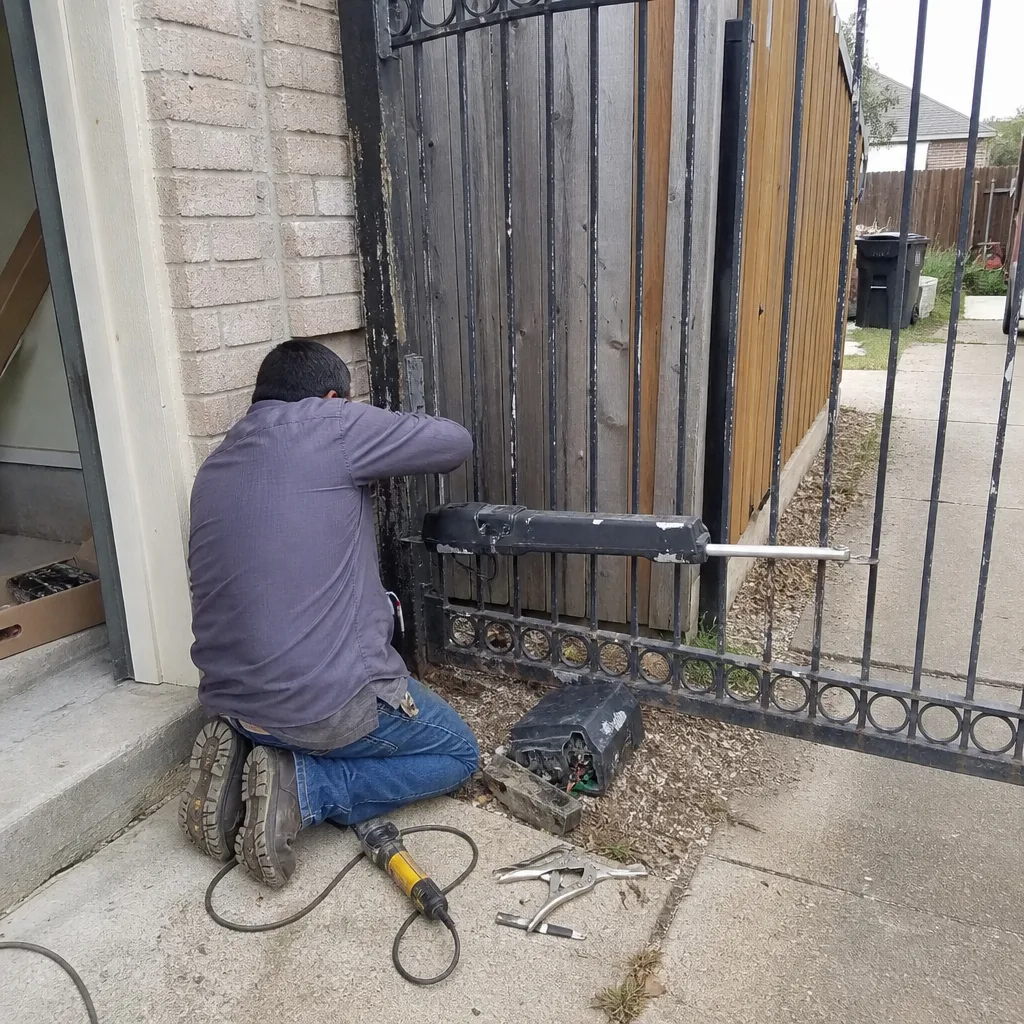 Before
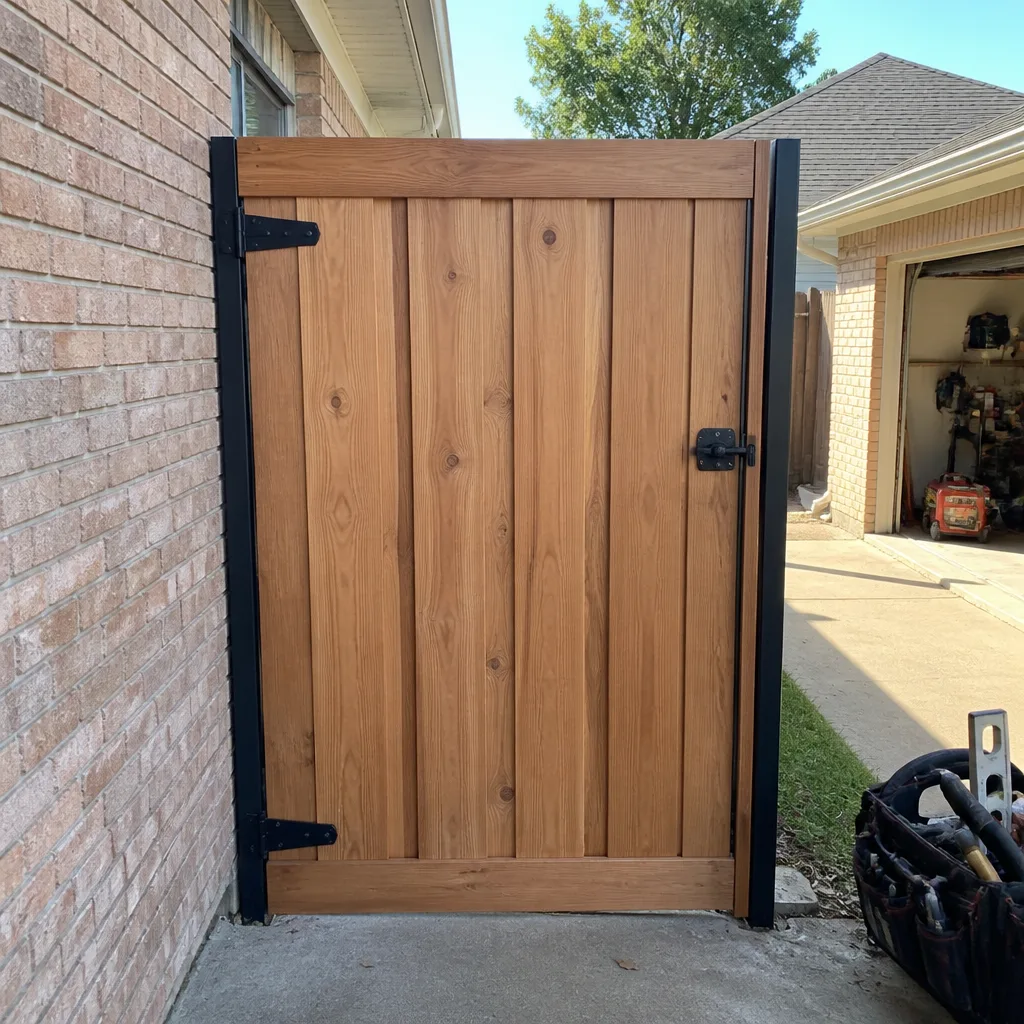 After
After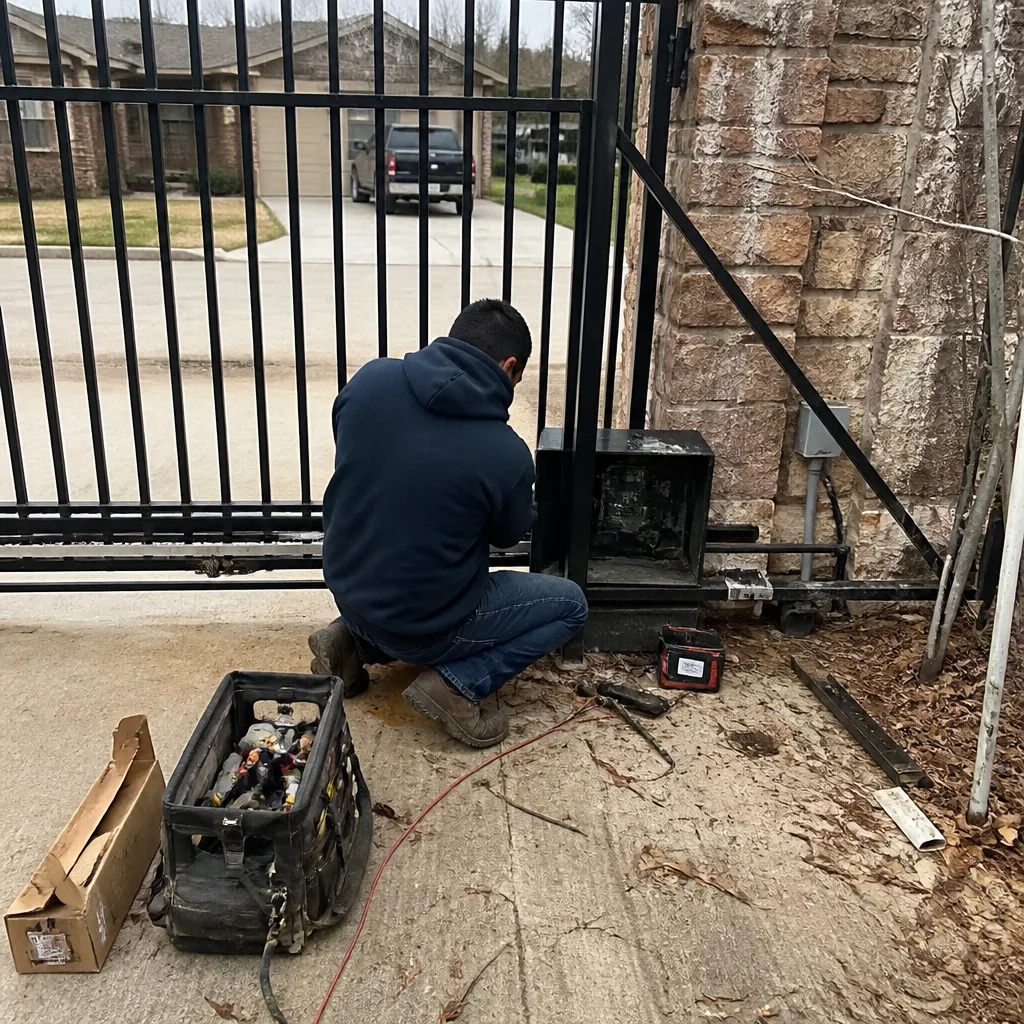 Before
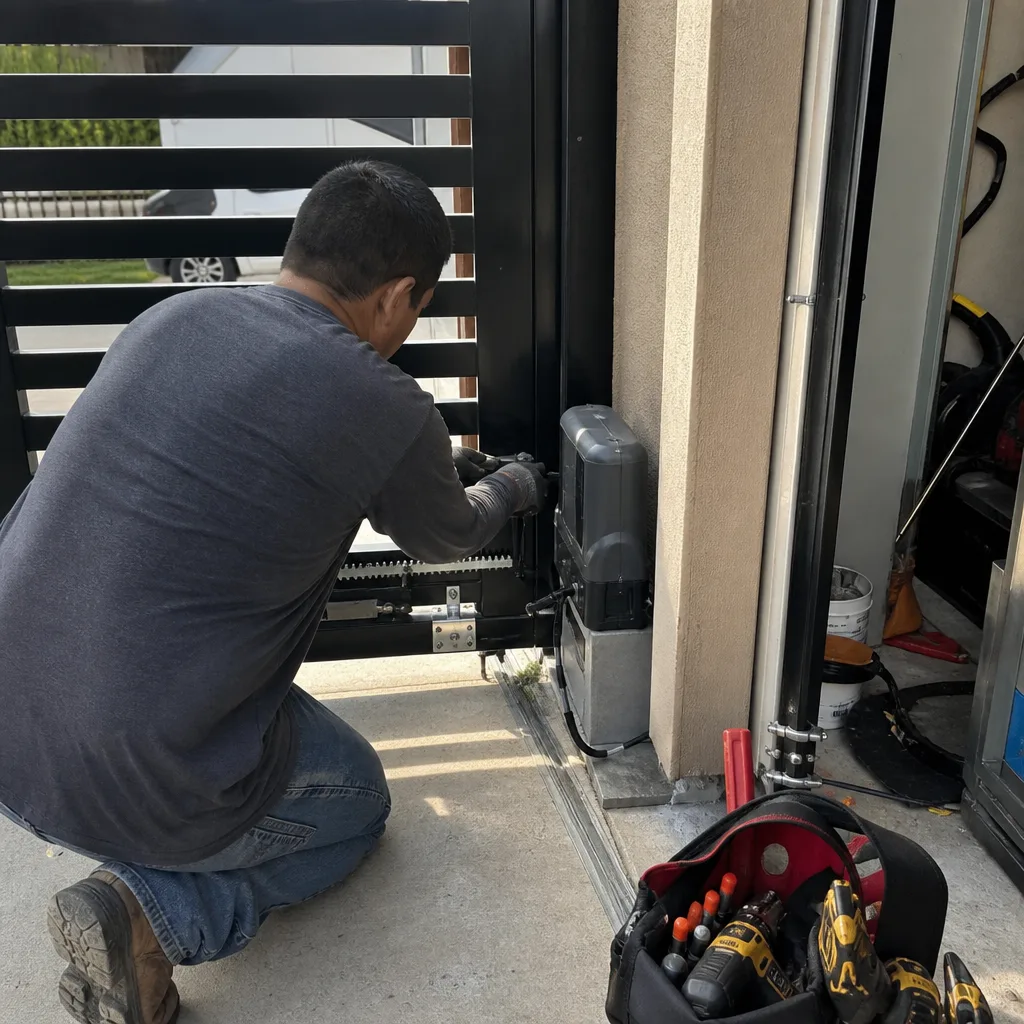 After
After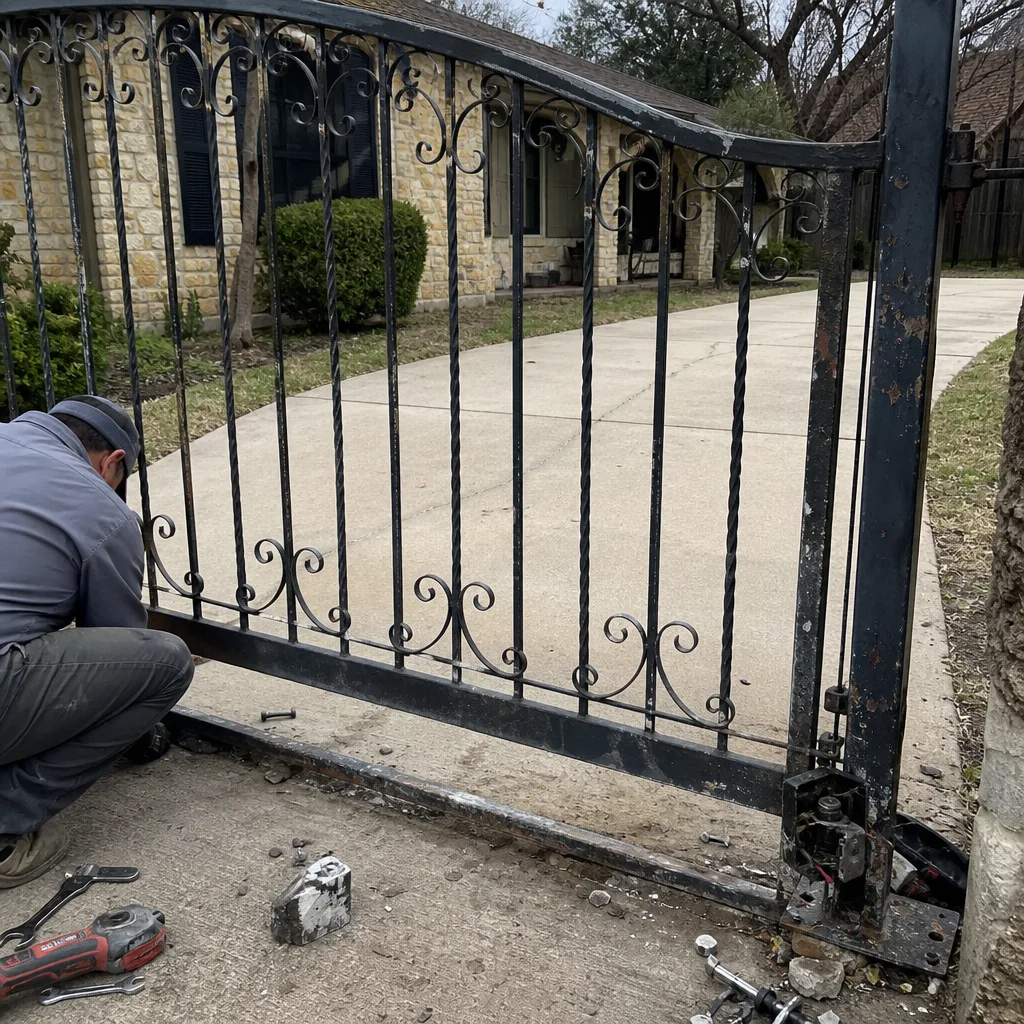 Before
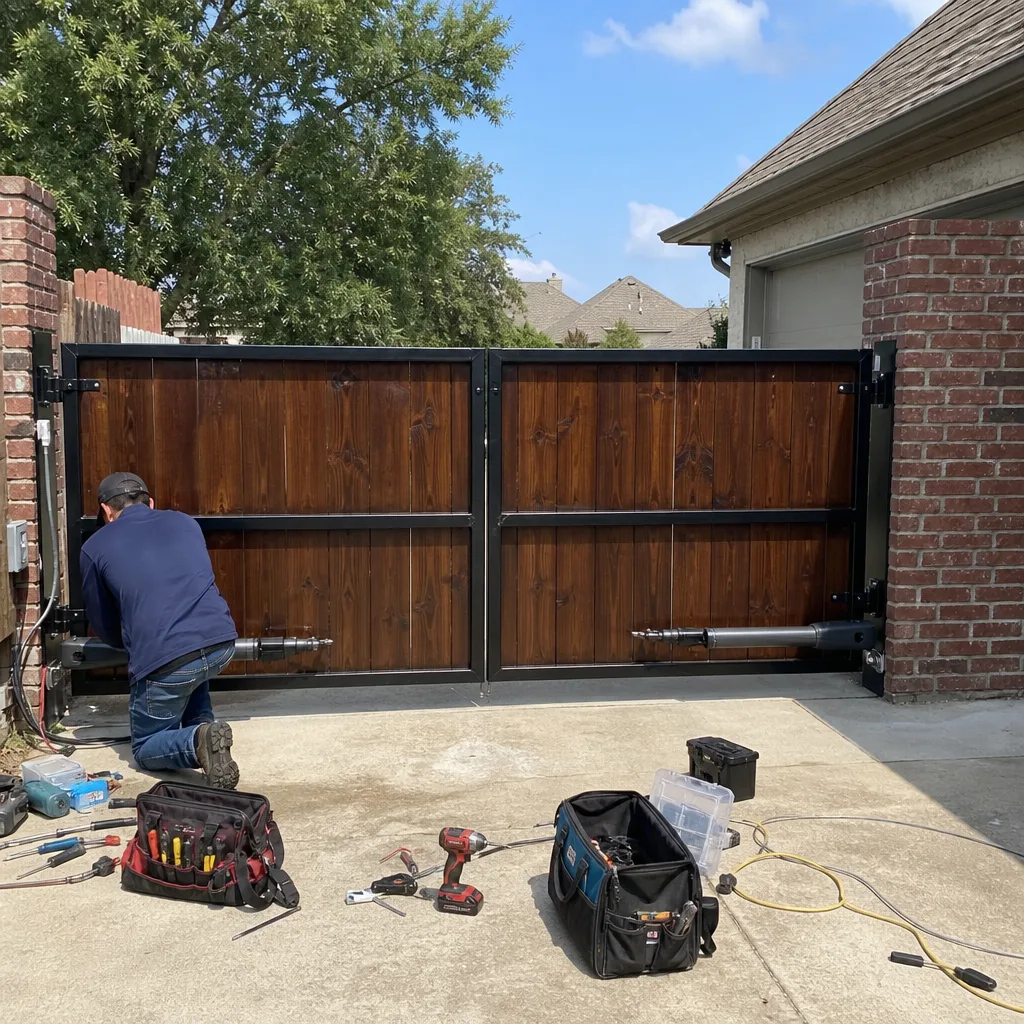 After
AfterGate Repair Permits, Codes & Inspections in TX: What You Need to Know
Here’s the part nobody mentions in the estimate: if a gate installation or significant structural repair wasn’t permitted when it should have been, it can surface during a home sale inspection and become your problem to resolve - sometimes years after the work was done and the contractor is long gone. In Grand Prairie, we’ve watched homeowners inherit exactly that problem. A buyer’s inspector flags the gate, the lender hesitates, and suddenly a $400 repair from 2019 is a $2,400 negotiation point at closing. This guide draws the line between what needs a permit, what doesn’t, and where the real liability hides - without the legal runaround - and if you’re already seeing problems, our Gate Repair team can help assess what you’re dealing with.
Quick Answer
Most residential gate repairs in Grand Prairie and across Texas don’t require a permit. You can replace a hinge, swap a wheel, weld a cracked frame, or install a new opener on an existing gate without pulling anything from the city. What changes the picture is when work crosses into alteration - moving the gate’s footprint, replacing structural posts, changing the gate’s size or swing direction, or adding an automatic opener where one never existed. Those jobs can trigger permit requirements, and the specifics depend on where you live: Grand Prairie city limits, Dallas County unincorporated areas, or Tarrant County jurisdiction.
Table of Contents
- Repair vs. Alteration: Where Grand Prairie Draws the Line
- HOA Rules vs. City Code: Which One Actually Controls Your Gate
- What “Like-for-Like Replacement” Really Means
- UL 325 and Automatic Gate Openers: The Inspection Nobody Tells You About
- Grand Prairie-Specific Requirements and Local Code Reality
- How to Check Whether a Previous Owner’s Gate Work Was Permitted
- What to Do If the Work Wasn’t Permitted
- Common Mistakes to Avoid
- When to Call a Professional
- Frequently Asked Questions
Repair vs. Alteration: Where Grand Prairie Draws the Line
The threshold in Grand Prairie - and across most of Tarrant and Dallas County - is simple in plain terms: work that restores what already existed is a repair. Work that changes what existed is an alteration. That distinction, not the size of the job, is what controls whether a permit enters the picture.
A repair means you’re putting back what was there. You replace a bent hinge post that rotted at ground level with a new post in the same hole. You swap a worn wheel on a sliding gate. You weld a crack in a steel frame. You replace a damaged gate motor with a new one that mounts to the same bracket and runs the same gate. None of that requires a permit in Grand Prairie, and it doesn’t require one in unincorporated Tarrant County or Dallas County either.
An alteration means you’re changing the physical facts of the gate. You widen the driveway and move the gate’s post line. You convert a single swing gate to a double swing. You add an automatic opener to a gate that has always been manual. You pour new concrete footings in a new location. You change a gate from swinging to sliding. That’s when the city of Grand Prairie expects a permit, because the work now involves new structural loads, new electrical runs, or both.
We’ve seen the confusion play out on gates across Grand Prairie, from the older neighborhoods near Dalworth Road to the newer planned communities along Camp Wisdom. Homeowners assume “it’s just a gate” so it must be exempt. Contractors sometimes assume the same thing. Neither assumption protects you when a code inspector or a home inspector starts asking questions later.
Where the permit line actually sits for common gate jobs
- Replacing a gate operator on an existing automatic gate: No permit. It’s a like-for-like mechanical swap.
- Adding a gate operator to a previously manual gate: Permit potentially required. The electrical run is new work, and the gate itself must now meet automatic gate safety standards under UL 325.
- Replacing a broken hinge or wheel: No permit. This is maintenance.
- Welding a cracked frame or gate panel: No permit. The gate’s footprint and structure aren’t changing.
- Replacing a rotted or bent post in the same location: No permit in most Grand Prairie cases. New post in the same hole, same gate, same swing is repair.
- Moving the gate line, changing swing direction, or widening the opening: Permit required. This is new construction in the city’s eyes.
- Pouring new footings for a relocated post: Permit required as part of the alteration.
If you’re not sure which side of the line your job falls on, the city’s permit office can tell you in about ten minutes on the phone. We’ve also learned to recognize the pattern: if the work involves a shovel, a new electrical line, or moving the gate more than a few inches, ask first. A gate sags in the hinge post, not in the middle - and the permit question usually lives in the same place: the point where the old structure meets any new work.
HOA Rules vs. City Code: Which One Actually Controls Your Gate
In Grand Prairie’s planned communities - neighborhoods like Mira Lagos, Lake Parks, Westchester, and the subdivisions that line the southern edge of Joe Pool Lake - HOAs often write gate rules that are stricter than anything the city requires. Understanding which authority controls what is the difference between a smooth project and a letter from the management company.
City code says what you may build: setbacks, heights, structural requirements, electrical safety, and whether a permit is required. HOA covenants say what it may look like and sometimes whether it may exist at all: materials, colors, height in the front yard, visibility from the street, and sometimes the specific brand of gate opener that’s approved.
Here’s the part that surprises Grand Prairie homeowners: an HOA can’t override city code, but it can absolutely stop a gate project that the city would happily permit. You might pull a city permit for a six-foot steel gate along the side yard, and your HOA can still deny the project because the covenants cap side-yard gates at four feet. The city won’t enforce HOA rules, and the HOA won’t enforce city code. They’re parallel systems, and both have to be satisfied.
How the two layers stack in practice
- Step one: Check your HOA covenants for gate restrictions before you spend a dollar on design. Look for language about front-yard vs. side-yard gates, height limits, material finish, and automatic opener requirements.
- Step two: Submit an architectural request to the HOA if your covenants require one. Many Grand Prairie HOAs want drawings or photos before they’ll approve a gate project.
- Step three: Check with the city of Grand Prairie’s permit office only after the HOA approves. There’s no point pulling a city permit for a gate the HOA will force you to remove.
- Step four: Keep both approvals in writing. When the home inspector or the next buyer asks, you’ll have the paper trail.
The order matters. We’ve seen Grand Prairie homeowners skip step one, build the gate, and then find themselves in a fight with an architectural committee that can levy fines. It’s easier to read the covenants first than to argue with them later. If you’re not sure how to read your HOA’s gate language, a local contractor who works in your specific neighborhood will usually know the rules already - because they’ve built or repaired gates there before. For How to Hire a Gate Repair Contractor in Grand Prairie: A Step-by-Step Guide, see our walkthrough.
What “Like-for-Like Replacement” Really Means
“Like-for-like replacement” is the phrase contractors use to explain why no permit is needed. It means: the new part or component serves the same function as the old one, attaches in the same place, and doesn’t change the gate’s structural design. When it’s true, it’s legitimate. When it’s stretched, it’s a way to skip a permit that should have been pulled.
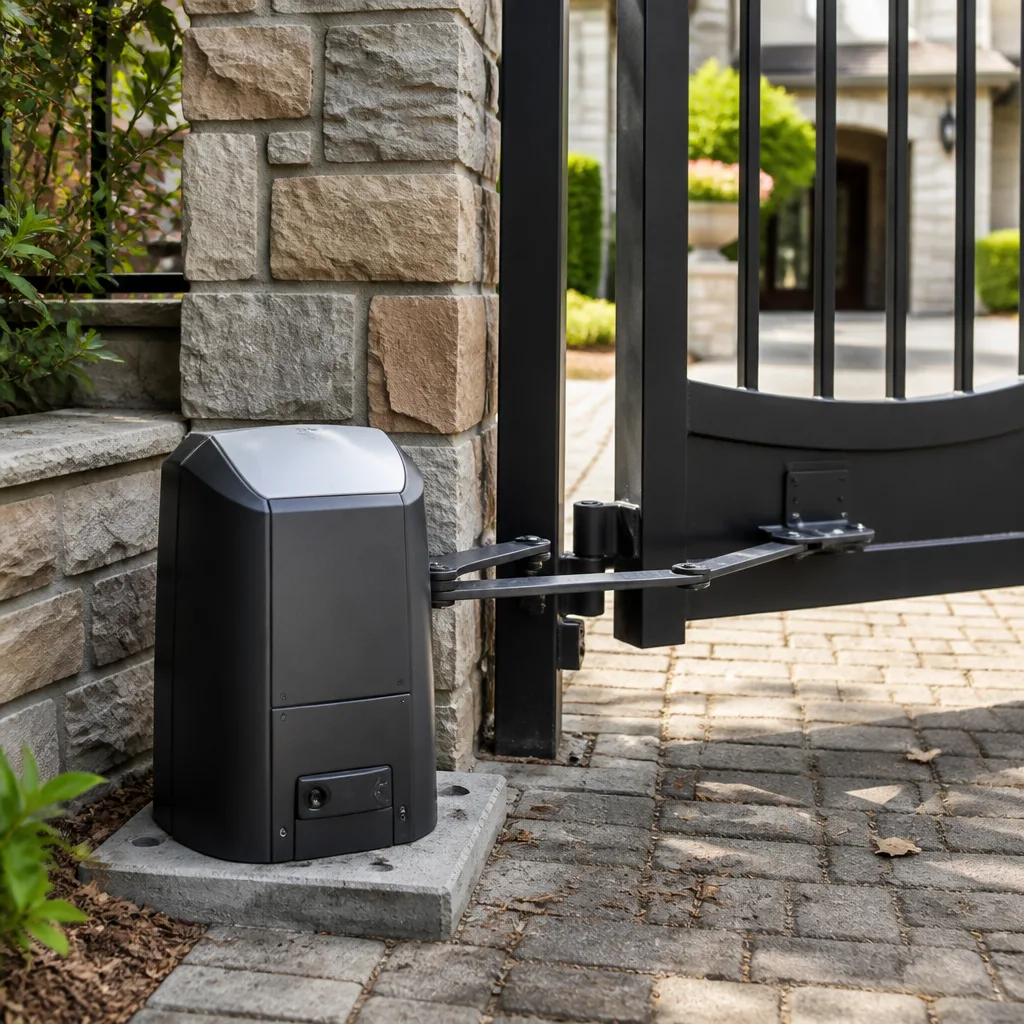
The honest use of like-for-like looks like this: the old gate motor was a LiftMaster that bolted to a pad-mount post. The new one is a different LiftMaster model that bolts to the same post, pulls the same gate, and uses the same electrical service. The function hasn’t changed, the load hasn’t changed, the electrical run hasn’t changed. No permit.
The stretched version looks different. The old gate was manual. The new one is automatic. The contractor calls it a like-for-like swap because “the gate itself is the same gate.” But the gate’s function has changed entirely, and so has the safety profile. An automatic gate opens a whole new set of requirements under UL 325, including photo eyes, safety edges, and entrapment protection. Calling that like-for-like is the equivalent of calling a window replacement like-for-like when you’ve actually cut a new window opening. The word does real work, and it’s being misused.
Red flags that a contractor is stretching the term
- They describe adding an automatic opener as “just swapping in a motor.” It’s not. It’s converting a manual structure to powered equipment.
- They say “the city doesn’t look at that stuff anyway.” Whether or not the city is likely to inspect doesn’t change what the code requires.
- They won’t put the word “like-for-like” in writing. If they’ll say it on the phone but won’t sign a line saying it, ask why.
- They claim the work is exempt because the gate is “on private property.” Property lines don’t exempt you from electrical safety rules.
In Grand Prairie, a true like-for-like replacement on a gate rarely needs a permit. But the test isn’t whether the same gate is still there at the end. The test is whether the gate’s function, structure, or electrical profile changed. If any of those three changed, the honest description is alteration, not replacement.
UL 325 and Automatic Gate Openers: The Inspection Nobody Tells You About
UL 325 is the national safety standard for automatic gate operators, and it’s the reason we ask about your gate’s entrapment protection before we touch an opener. The standard covers every powered gate in the country, including Grand Prairie. It’s not enforced by the city of Grand Prairie directly - it’s enforced by liability. If a gate hurts someone and the opener wasn’t installed to UL 325 standards, whoever installed it has a problem. So does the homeowner who signed for the work.
The standard requires several layers of protection on every automatic gate that serves a residence. The exact requirements depend on the gate’s class - Class I is residential, Class II is commercial or multi-family - but for a typical Grand Prairie home, here’s what UL 325 demands:
- Entrapment protection: The gate must stop and reverse if it encounters a person, a vehicle, or an obstruction while closing. That protection can come from contact edges, non-contact photo eyes, or both depending on the installation.
- A separate entrapment protection device: In addition to the inherent reversing feature built into the opener, UL 325 requires a second, external device - typically photo eyes across the gate opening - on all new installations.
- Warning signage: Every automatic gate must carry a visible warning sign that meets UL 325’s specifications for wording and placement. This one gets missed constantly on Grand Prairie gates.
- Manual release: The opener must be releasable by hand without tools, in case of power failure or entrapment emergency.
- Gate specific-speed and force limits: The opener’s closing force and speed must fall within the standard’s limits for a Class I residential gate.
- A completed permit application: Online through the city’s portal or in person at City Hall.
- A site plan: A simple drawing showing the property lines, the house, and the gate’s proposed location with dimensions.
- Gate specifications: Height, width, material, swing or slide, and whether it’s manual or automatic.
- Electrical information: If the gate is automatic and needs a new circuit, the electrical details for the branch circuit and disconnect.
- Permit fee payment: Grand Prairie’s fee schedule for small residential projects is modest, typically falling well under $200 for a single gate project.
- Find your property’s exact legal address as the city records it - not your mailing address, which can differ in Grand Prairie.
- Contact the city of Grand Prairie Building Inspections division. Ask for a permit history search on the address.
- Ask specifically about electrical permits, since an automatic gate’s permit usually routes through electrical rather than structural.
- Cross-reference the permit dates with the age of the gate opener. A 2018 permit and a 2022 opener don’t line up.
- If you find no permit and the work should have required one, proceed to the next section: you have options.
- Assuming “it’s just a gate” means no rules apply. A gate is a structure with mechanical components and often electrical work. The rules may be lighter than for an addition, but they’re not zero. In Grand Prairie, the city’s permit requirement for an altered gate is real, and the UL 325 safety standard applies to every automatic opener regardless of permit status.
- Taking an HOA committee’s word over the city’s. An HOA can approve your gate and the city can still require a permit the HOA never mentioned. Check with both before you commit. We’ve seen Mira Lagos and Lake Parks homeowners get surprised by exactly this sequence, and the fix is always messier on the back end.
- Letting a contractor stretch “like-for-like” to avoid pulling a permit. When the phrase is used honestly, it’s a legitimate permit exemption. When it’s used to describe converting a manual gate to automatic, it’s a dodge. If the function changed, the exemption doesn’t apply.
- Skipping photo eyes and warning signage on an automatic gate. The opener’s built-in reverse isn’t enough under UL 325. A missing external entrapment device is the most common violation we find on Grand Prairie gates that were installed without inspection, and it’s a liability time bomb if a child or a delivery driver gets caught in the gate.
- Ignoring the previous owner’s gate until you’re selling the house. Permits don’t disappear, and inspectors do flag gates. Checking your gate’s permit status now costs less than discovering it during escrow. We’ve seen sellers lose thousands at the negotiation table over a gate fix that would have cost a few hundred to close out a year earlier.
- Assuming unincorporated Grand Prairie means “do whatever you want.” Unincorporated Tarrant County and Dallas County may not run residential gate permit programs, but the electrical code and UL 325 still apply. The liability doesn’t care about your county line.
- Paying for a permit and then never calling for the inspection. A permit isn’t complete until the inspection passes. An open permit with no final inspection is almost as bad as no permit at all when it comes time to sell. Close the loop.
We service openers from Viking, Ghost Controls, DoorKing, and Elite across Grand Prairie, and every one of those manufacturers builds UL 325 compliance into their residential units. The problem isn’t the equipment. The problem is installation practices that skip the external entrapment device or the signage because “the motor has its own safety reverse.” It does, and UL 325 still requires the second layer.
Here’s the reality about inspections: the city of Grand Prairie doesn’t send an inspector out to verify your gate opener meets UL 325. Neither does Tarrant or Dallas County. The “inspection” happens in two places. First, when the electrical work is permitted, the city’s electrical inspector checks the wiring. Second, and much more seriously, it happens in a courtroom if someone gets hurt. At that point, the standard gets scrutinized, and “everybody else skips the photo eyes” isn’t a defense. If your gate has a motor, spend the hour to make sure the safety devices are actually installed and wired, not just sitting in the box.
Grand Prairie-Specific Requirements and Local Code Reality
Grand Prairie sits in a unique spot: the city itself spans three counties - Dallas, Tarrant, and a sliver of Ellis. That means a house on one side of the street can be under a different county’s permitting jurisdiction than the house across the street. In practice, for gate work, what matters most is whether you’re inside Grand Prairie city limits or in unincorporated county territory.
Inside Grand Prairie city limits, the city’s permitting requirements apply. The city uses the International Residential Code as its base, and for gates the relevant sections are found in the building and electrical chapters. A permitted gate project in Grand Prairie typically runs through the city’s permit portal, requires a simple site plan showing the gate’s location relative to property lines, and triggers an electrical inspection if the project includes a new automatic opener with a new power run.
In unincorporated Tarrant County or Dallas County, the requirements are generally lighter. Neither county runs a permit program that covers residential gate work the way a city does. But “no permit needed” doesn’t mean “no rules apply.” Electrical work still needs to meet the National Electrical Code, and the UL 325 safety requirements apply everywhere, not just inside city limits.
One Grand Prairie-specific detail that matters in our climate: gate posts in the clay-heavy soils along the Trinity River floodplain need deeper footings than the same gate would need in sandy soil. The code doesn’t always spell that out, but the frost line and soil movement in this part of Texas will move a shallow post within a few years. The fix isn’t a code requirement - it’s good local practice. A gate sags in the hinge post, and in Grand Prairie the post is fighting soil that expands and contracts every wet-dry cycle.
What Grand Prairie typically asks for when a gate permit is required
The process is not intimidating. The city is not looking for reasons to deny a residential gate. What the city is doing is creating a record that the work was reviewed and inspected - which is exactly what a future buyer’s inspector will want to see.
How to Check Whether a Previous Owner’s Gate Work Was Permitted
If you bought a home in Grand Prairie with an automatic gate already installed, the question of whether that gate was permitted belongs to you now. Checking isn’t hard, and it’s worth doing before it matters.
The first step is the simplest: ask the city. Grand Prairie’s permit records are public, and the city’s building department can search them by address. Call or submit an online request, give them your street address, and ask whether any permits were pulled for a gate or gate-related electrical work. If the answer is yes, ask for the permit number and inspection history. If the answer is no, you’ve answered the question.
The second source is your closing documents. When you bought the house, the title work often includes a permit search or at least a disclosure from the seller about unpermitted work. Not always - but often enough that it’s worth flipping through the file before you start calling the city.
The third source is the equipment itself. A gate opener from Ghost Controls, Viking, DoorKing, or Elite installed in the last ten years will have a date code on the unit or the manual. If you can determine roughly when the gate was automated and then check whether a permit was pulled for that date, you’ve built a complete timeline. The physical evidence and the paper trail either match or they don’t.
Step-by-step: researching your gate’s permit history
The point of this research isn’t to create a problem. It’s to know where you stand before someone else forces the issue. Home inspectors in the Dallas-Fort Worth market are increasingly flagging automatic gates, and once they flag it, the buyer’s lender may want documentation. Knowing the answer now costs an afternoon. Finding out during a sale costs leverage.
What to Do If the Work Wasn’t Permitted
If you discover that a previous owner’s gate work wasn’t permitted and should have been, you’re not automatically facing a tear-out. Grand Prairie is not wandering the streets looking for unpermitted gates. What you’re facing is a paperwork gap, and in most cases there’s a legal path to close it.
Option one is retroactive permitting. The city’s process for this varies, but in general, you submit the same permit application the original contractor should have submitted, pay the fee, and schedule an inspection. If the work meets current code, the permit gets issued and the inspection gets signed off. The gap is closed. If the work doesn’t meet code - for example, the automatic gate has no photo eyes or the electrical run uses the wrong wire - then the inspection identifies what needs correcting. You fix it, re-inspect, and the gate is now properly documented.
Option two is voluntary disclosure at the time of sale. Some sellers simply disclose the unpermitted work to the buyer, negotiate a credit, and let the buyer handle the permitting. This isn’t the most profitable path, but it is the honest one, and it avoids an inspector finding the issue mid-transaction and freezing everything.
Option three is correction. If the gate has a genuine safety issue - missing entrapment protection, an opener installed without proper wiring, a post that’s pulling loose - the best move is to fix the work and then permit whatever portion requires permitting. A gate that meets UL 325, has a properly run circuit, and stands square on its posts is a gate that will pass inspection. We’ve done this in Grand Prairie more times than we can count: a homeowner buys a house, discovers the gate was a weekend project, and we bring it up to standard.
The cost of closing a permit gap is almost always lower than the cost of a failed home inspection. A buyer’s inspector who flags an unpermitted gate turns it into a negotiation point. A seller who has already closed the gap has nothing to negotiate. If you’re in this situation in Grand Prairie, the fix usually involves an afternoon of work and a re-inspection fee - not a legal battle.
Common Mistakes to Avoid
When to Call a Professional
Some gate work is genuinely DIY-able. Replacing a hinge, touching up a weld, swapping a battery in an opener - fine, go ahead. The places where a professional earns their keep is where the law, the safety standard, and the structure all meet. For more guides & resources on navigating these decisions, explore our blog. If your Grand Prairie gate project involves an automatic opener that’s being added for the first time, a structural post that’s failing, or a permit question you can’t resolve confidently, call someone who does this work in this city every week.
We won’t upsell you. We’ll tell you if the work needs a permit, and we’ll tell you if it doesn’t. That’s part of the job. Gatewood Fence & Gate offers free estimates in Grand Prairie - call (903) 829-4499 and a live person picks up, day or night. Hal Gatewood started this shop in 2001, and the name on the building is the one you’ll get on the phone.
For related services, see our guides on Gate Repair in Grand Prairie, Gate Installation in Grand Prairie, and Gate Motor & Opener in Grand Prairie.
Frequently Asked Questions
Most gate repairs in Grand Prairie do not require a permit. Replacing hinges, wheels, brackets, or an existing gate opener is considered maintenance and repair work, which is exempt from the city’s permit requirement. A permit becomes necessary when the work changes the gate’s footprint, structure, swing direction, or adds an automatic opener where one never existed. When in doubt, call our team at (903) 829-4499 and we’ll help you determine which side of the line your job falls on.
If your automatic gate lacks the required entrapment protection - typically external photo eyes - or the mandatory warning signage, you’re carrying liability exposure even if the gate operates fine. UL 325 isn’t enforced by Grand Prairie inspectors, but it becomes the legal standard in any injury claim. The fix is usually simple: install the missing safety devices and signage, verify the opener’s force settings, and the gate is compliant. Call (903) 829-4499 for a free assessment of your gate’s safety setup.
Grand Prairie’s permit fees for a residential gate project are modest, typically under $200 for a single gate involving new structure or electrical work. The exact amount depends on the scope of work and whether electrical review is required. The permit fee is a small part of the project; the inspection record it creates is the valuable part. Call the city’s permit office for current fee schedules, or call us at (903) 829-4499 and we’ll walk you through what to expect.
Yes, your HOA can deny or restrict a gate project even if the city of Grand Prairie would permit it. HOAs in Grand Prairie’s planned communities often regulate gate height, material, color, visibility, and location through architectural covenants. The HOA controls aesthetics and community standards; the city controls code compliance and safety. Both approvals matter, and you need both before work starts.
Contact the city of Grand Prairie Building Inspections division and request a permit history search for your address. Permit records are public, and the city can tell you whether any gate or electrical permits were ever pulled at your property. If you find no permit for work that should have required one, you can typically close the gap through retroactive permitting, which involves a permit application, fee payment, and inspection. Call us at (903) 829-4499 if you’d like help identifying whether your gate’s work falls into the permit-required category.
Adding an automatic opener to a previously manual gate is the single most likely gate project in Grand Prairie to require a permit, because it involves new electrical work and the gate must now comply with UL 325 entrapment protection standards. The project typically needs a new branch circuit, external photo eyes, warning signage, and a manual release mechanism. This is exactly the kind of work where “like-for-like” doesn’t apply, because the gate’s function has changed. We install automatic openers from Viking, Ghost Controls, DoorKing, Elite, LiftMaster, FAAC, BFT, Linear, and Mighty Mule, and we handle the permit conversation with the city as part of the job.
The Bottom Line
Most gate repairs in Grand Prairie need no permit. What needs a permit is a narrow band of work: altering the gate’s structure or footprint, adding an automatic opener, or changing the electrical profile. And the things that need your attention regardless of permits are the HOA’s rules and the UL 325 safety standard. The smart play is to know which category your project falls into before the work starts, check what the previous owner left you, and close any permit gaps while closing costs are low. When you need a straight answer from someone who has been doing this in Grand Prairie since 2001, call (903) 829-4499. A live person answers, and the estimate is free.
Written by Hal Gatewood, Owner at Gatewood Fence & Gate, serving Grand Prairie since 2001.